



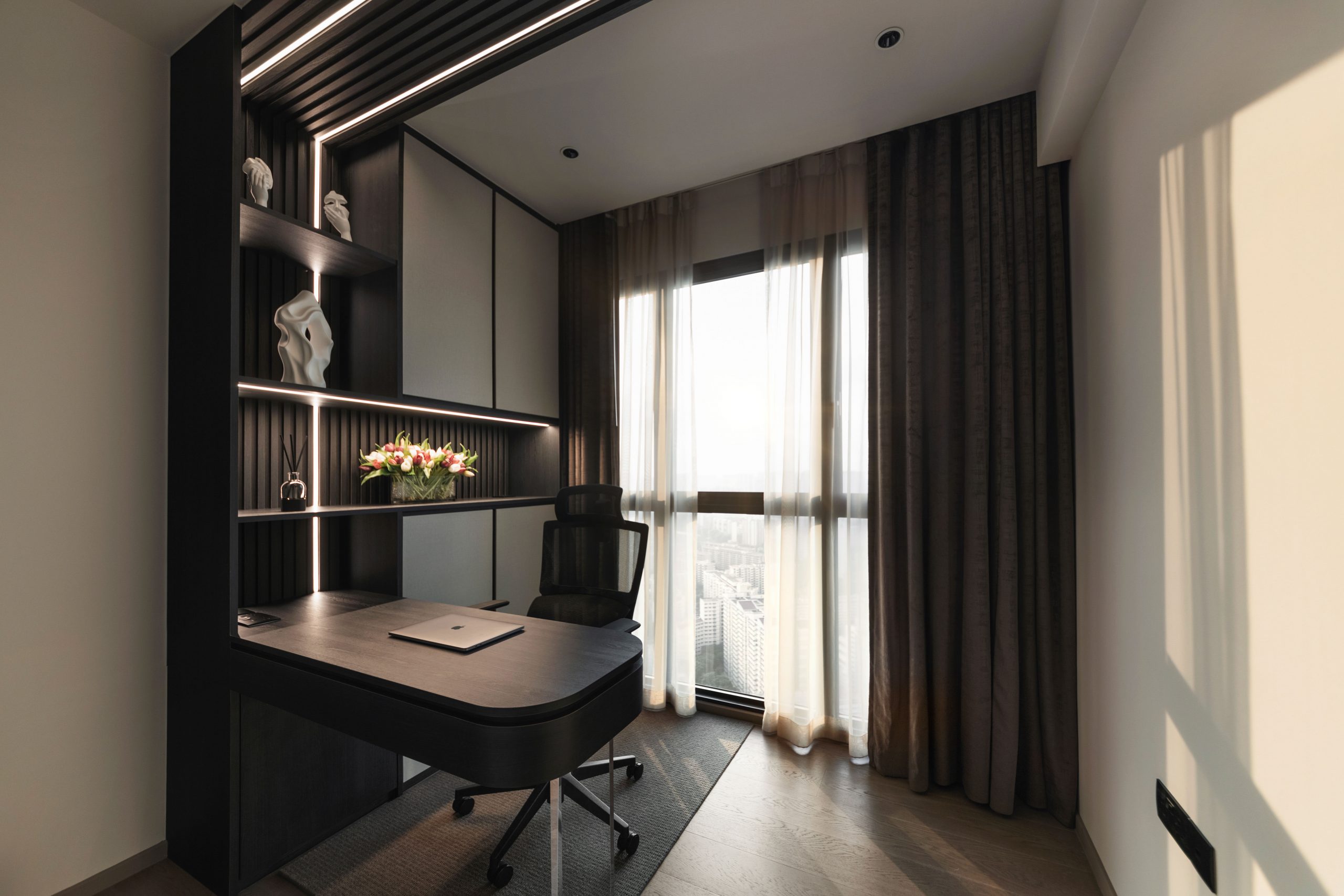
The way Singaporeans live and work has changed significantly over the past few years. Homes are no longer just places to unwind at the end of the day. They now serve as workspaces, meeting rooms, creative studios, and collaborative zones. This shift has led many homeowners to look beyond traditional residential styling and explore professional-grade solutions typically seen in corporate environments. In this context, commercial-grade home interiors are becoming a natural evolution within residential design, especially as expectations of what an interior design company in Singapore can deliver continue to expand. At The Interior Lab, we have observed a growing preference for home workspaces that feel structured and efficient, yet remain comfortable and suited to daily living.
This article explores how commercial office design principles can be translated into residential settings, creating homes that support productivity, professionalism, and long-term comfort.
Hybrid work and remote arrangements have become a long-term reality for many professionals in Singapore. As a result, dining tables and spare bedrooms are no longer sufficient as workspaces. Homeowners are now seeking environments that support focus, video calls, storage, and daily routines with the same efficiency as a commercial office.
Office design brings with it several advantages:
When adapted correctly, these principles elevate the home rather than overpower it.
Commercial-grade does not mean cold or impersonal. In residential interiors, it refers to the application of professional standards in planning, materials, and detailing.
This includes:
The goal is to bring the discipline of office design into the home while preserving a relaxed and inviting atmosphere.
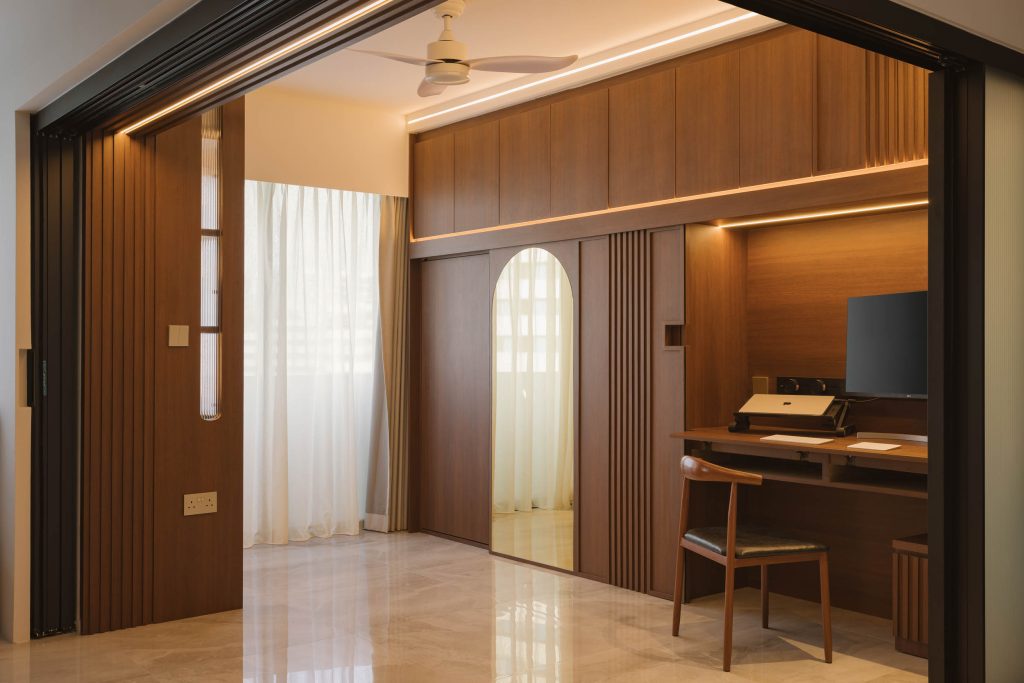
Just as in commercial projects, successful residential workspaces begin with spatial planning. A well-designed home office or hybrid living space must consider how the area will be used throughout the day.
Key questions include:
Clear answers guide decisions on zoning, furniture placement, and circulation.
Not every home has the luxury of a separate study. In many Singapore apartments and condominiums, workspaces must coexist with living and dining areas. Rather than treating the work zone as an afterthought, thoughtful planning allows it to feel seamlessly embedded within the overall design.
Instead of constructing physical dividers, spatial definition can be achieved through furniture placement, ceiling treatments, rugs, or subtle changes in flooring. This keeps the home open while clearly distinguishing work and leisure areas.
Custom carpentry can frame the workspace as part of the architectural composition. Integrated desks, shelving, and storage units create a cohesive look that feels deliberate rather than temporary.
Continuity in finishes, colours, and textures ensures the workspace does not feel disconnected from the rest of the home. When materials flow naturally between zones, the space remains harmonious.
This approach allows the workspace to feel intentional rather than improvised, balancing professional functionality with residential warmth.
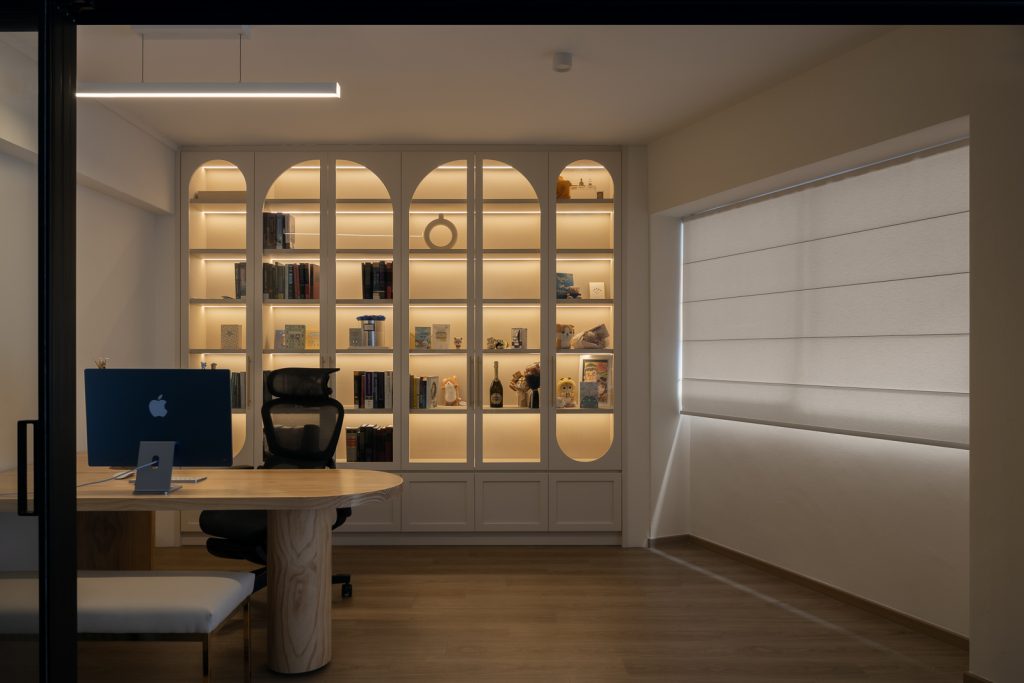
One of the most valuable lessons from office design is the importance of ergonomics. Poor posture, inadequate lighting, and cramped setups can affect both health and productivity.
Residential applications include:
These considerations are often overlooked in home interiors but make a significant difference over time.
Lighting plays a critical role in both commercial and residential workspaces. In homes, the challenge lies in balancing task lighting with ambient comfort.
A professional lighting plan typically includes:
Thoughtful lighting ensures the space remains comfortable beyond office hours.
Noise control is essential in offices, and the same principles apply at home, especially for video calls and focused tasks. Acoustic planning ensures that a professional home workspace remains conducive to concentration without disrupting the rest of the household.
Upholstered furniture, rugs, curtains, and fabric wall elements help reduce sound reflection. These materials soften the acoustic environment while maintaining residential warmth.
Discreet acoustic panels can be built into feature walls or ceiling designs to minimise echo and improve clarity during calls and meetings. When integrated thoughtfully, they enhance performance without drawing attention.
Strategic layout decisions, such as placing desks away from main circulation paths or communal areas, can significantly reduce distractions. Even subtle shifts in orientation can improve privacy and focus.
These measures help maintain privacy and concentration without requiring major structural modifications.
Commercial interiors prioritise durability, while residential interiors focus on comfort. The most successful professional home designs blend both.
Common material strategies include:
This combination ensures the space feels refined rather than utilitarian.
The table below highlights how commercial design principles translate into residential applications.
|
Design Aspect |
Commercial Approach |
Residential Adaptation |
|
Furniture |
Ergonomic and task-focused |
Ergonomic with softer finishes |
|
Lighting |
Task-driven and consistent |
Layered for work and leisure |
|
Storage |
Highly structured systems |
Concealed and integrated storage |
|
Acoustics |
Performance-driven solutions |
Discreet acoustic treatments |
|
Layout |
Efficiency-focused |
Balanced for work and living |
This comparison shows how office design logic can be refined for home use.
Modern work relies heavily on technology, but exposed cables and equipment can disrupt residential aesthetics.
Professional solutions include:
These strategies ensure functionality without compromising visual calm.
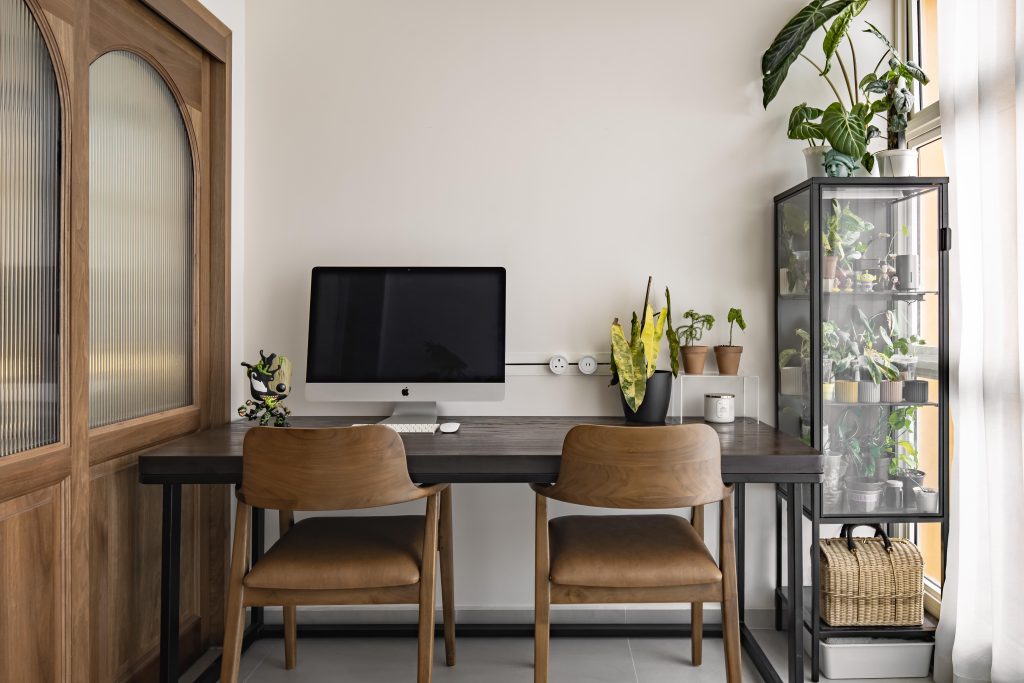
A common concern among homeowners is that office-inspired interiors may feel too formal. This is where careful design interpretation becomes important. The goal is to incorporate professional functionality without losing the comfort and character of a home.
Wood finishes, textured upholstery, and soft furnishings introduce warmth that balances the precision of commercial-grade elements. These materials prevent the space from feeling overly corporate.
Soft neutrals and warm tones help create a relaxed atmosphere. A restrained colour scheme ensures the workspace integrates smoothly into the rest of the home.
Artwork, curated objects, and meaningful décor can be layered into the space without creating clutter. These details reinforce a sense of individuality while maintaining visual clarity.
The result is a space that supports work efficiently while still feeling grounded and residential.
Investing in professionally planned home workspaces offers long-term benefits beyond daily productivity.
These include:
As work-from-home becomes a permanent feature for many, these considerations grow increasingly important.
Bringing office design principles into residential spaces requires more than selecting the right furniture. It involves understanding workflow, ergonomics, and spatial balance, then translating these into a home environment. In the context of working with an interior design company in Singapore, experience across both residential and commercial projects adds significant value.
At The Interior Lab, we approach professional home interiors by first understanding how our clients work, live, and move through their spaces. We then design solutions that combine commercial-grade performance with residential comfort. If you are looking to create a home that supports productivity without sacrificing warmth, our team can help you plan a space that feels both professional and personal.
Yes. Many office design principles focus on efficiency, making them especially useful in compact residential spaces.
Not when designed thoughtfully. The right materials, lighting, and layout ensure the space remains comfortable and inviting.
No. Commercial-grade solutions can be integrated into shared spaces through zoning and built-in design.
Most commercial-grade materials are chosen for durability and ease of maintenance, which can be beneficial in residential settings.
Ideally, workspace planning should be part of the initial design phase to ensure seamless integration with lighting, storage, and layout.
 BACK TO BLOG