



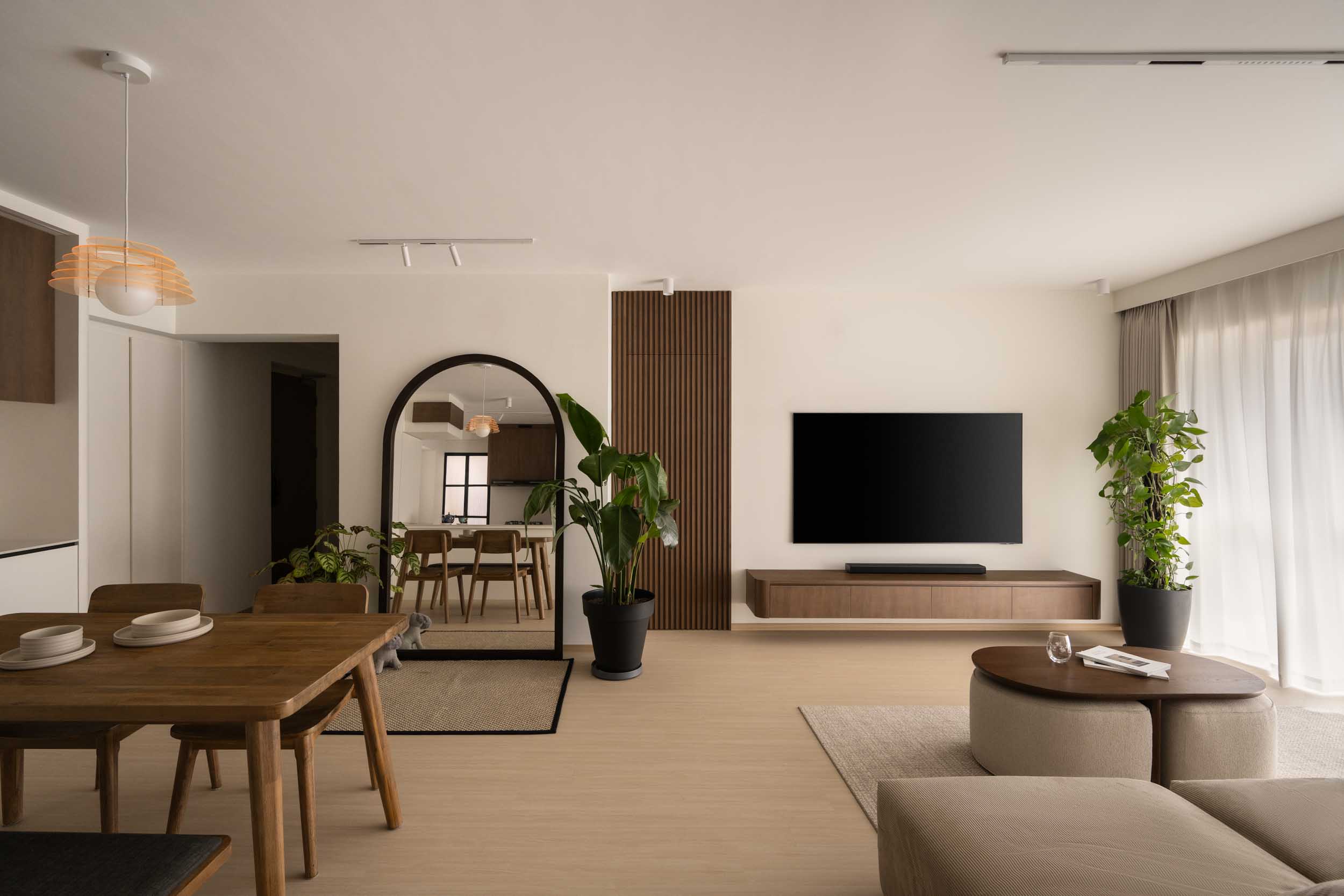
Open concept layouts have become a defining feature of interior design in Singapore, especially in modern HDB flats, condominiums, and landed homes. While removing walls creates a brighter and more social living environment, it also introduces a challenge many homeowners only notice after moving in: sound travels far more easily. At The Interior Lab, we often work with homeowners who love the openness of their space but want better acoustic comfort without compromising design intent.
This article explores how acoustic ceiling solutions can meaningfully improve sound management in open concept homes. We focus on Singapore-specific housing types, practical design considerations, and how ceiling treatments can be integrated discreetly into contemporary interiors.
Open concept living works well visually, but acoustically it behaves very differently from compartmentalised layouts. Sound waves travel freely across connected spaces, reflecting off hard surfaces such as tiled floors, glass panels, and bare ceilings.
In Singapore homes, this issue is often intensified by:
Without acoustic planning, noise from the television, kitchen appliances, or conversations can overlap, creating a sense of constant background sound rather than clear, comfortable audio.
Acoustic ceilings work by absorbing and diffusing sound rather than allowing it to bounce repeatedly around a space. Unlike wall panels or soft furnishings, ceilings cover a large surface area and address sound at its source, especially in open concept layouts.
Key benefits include:
For homeowners who want openness without noise fatigue, ceiling-based solutions are often the most effective starting point.
Each residential typology in Singapore comes with its own design and regulatory considerations. Acoustic ceiling solutions must be adapted accordingly.
HDB flats often have lower ceiling heights and stricter renovation guidelines. This means ceiling interventions must be carefully planned.
Common approaches include:
The goal is to improve sound comfort without significantly lowering the ceiling or affecting airflow from ceiling fans.
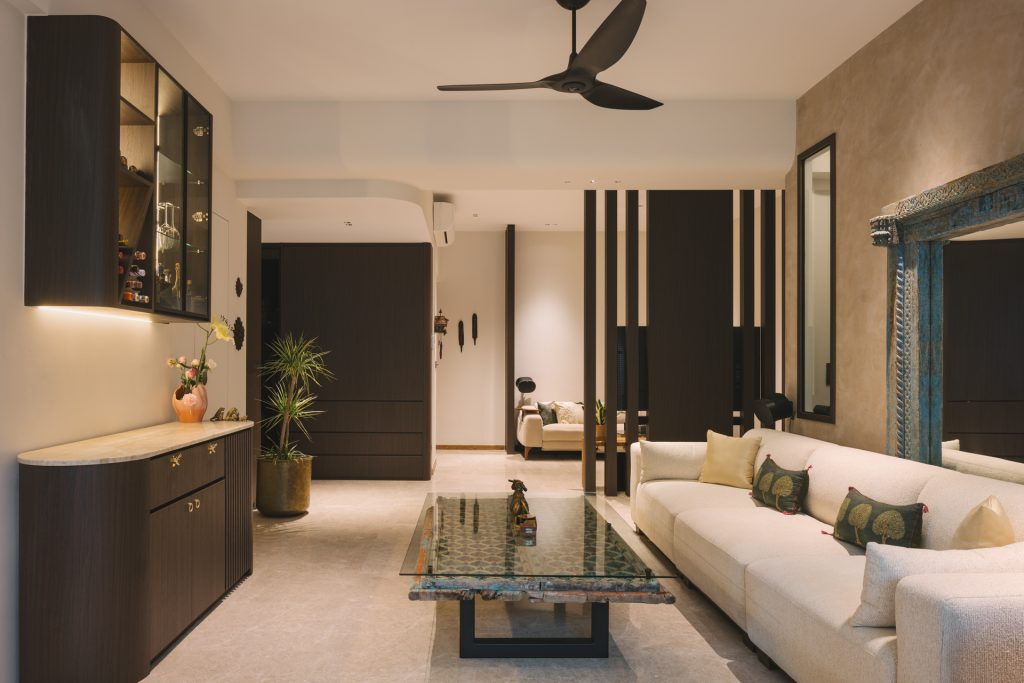
Condominiums typically allow greater flexibility in ceiling design, especially in living and dining zones.
Here, acoustic ceilings can be:
This dual function makes acoustic ceilings particularly effective in large open-plan condo units.
Landed properties often have higher ceilings and larger open spaces, which can increase echo if untreated.
Effective strategies include:

Material choice is central to both acoustic performance and aesthetics. In residential settings, materials must perform acoustically while remaining visually refined.
These panels are designed to absorb mid to high frequency sound and can be colour-matched to the interior palette. They are often used in living areas where speech clarity is important.
A popular option in Singapore homes, perforated gypsum boards look similar to standard ceilings but include small perforations backed by acoustic insulation. This makes them discreet yet effective.
Timber slat ceilings add warmth and texture while concealing acoustic layers behind them. This option works well in contemporary and Japandi-style interiors.
One common concern homeowners raise is whether acoustic ceilings will make their homes feel lower or darker. This is a valid consideration, especially in HDB flats.
Good acoustic ceiling design addresses this by:
When planned early, acoustic ceilings can enhance spatial quality rather than detract from it.
The table below outlines how different ceiling solutions perform in open concept Singapore homes.
|
Ceiling Solution |
Acoustic Performance |
Visual Impact |
Best Used In |
|
Perforated gypsum ceiling |
Moderate to high sound absorption |
Clean and minimal |
HDB and condominiums |
|
Fabric acoustic panels |
High sound absorption |
Soft, subtle texture |
Living and dining zones |
|
Timber slat ceiling with backing |
Moderate absorption with diffusion |
Warm, architectural |
Condos and landed homes |
|
Partial acoustic ceiling zones |
Targeted sound control |
Zoned visual interest |
Large open layouts |
This comparison helps homeowners understand how each option fits different spatial and lifestyle needs.
Acoustic ceilings should not be treated as a purely technical feature. They work best when integrated into the overall design concept.
In practice, this means:
At our studio, we treat acoustic ceilings as part of the design language, not an afterthought. This approach ensures the space remains cohesive while delivering functional benefits.

With remote and hybrid work now common in Singapore, acoustic comfort has become more important than ever. Open concept homes often double as workspaces during the day.
Acoustic ceilings can help by:
This makes them particularly valuable for households where multiple activities happen simultaneously.
Sound management is now an essential consideration in interior design in Singapore, especially as homes become more multifunctional. Acoustic ceilings offer a practical and elegant way to address noise challenges without compromising openness or style.
At The Interior Lab, we approach acoustic design as part of a holistic interior strategy. We assess how each space is used, how sound travels through it, and how ceiling solutions can be tailored to enhance comfort. If you are exploring ways to improve acoustic quality in your open concept home, our team can guide you through options that align with both your lifestyle and design vision.
Acoustic ceilings significantly reduce echo and sound reflection, but they do not make a space completely silent. They improve sound quality and comfort rather than blocking all noise.
Most acoustic ceiling treatments are permitted, but they must comply with HDB renovation guidelines. Design and installation should always consider ceiling height limits and service access.
Some acoustic ceiling solutions can be retrofitted, but the best results are achieved when they are planned alongside lighting and ceiling works during renovation.
When designed properly, acoustic ceilings can be coordinated with air-conditioning diffusers and fans without affecting airflow or performance.
The right solution depends on your layout, ceiling height, and daily activities. A professional assessment helps identify where sound issues occur and which ceiling strategy addresses them most effectively.
 BACK TO BLOG