



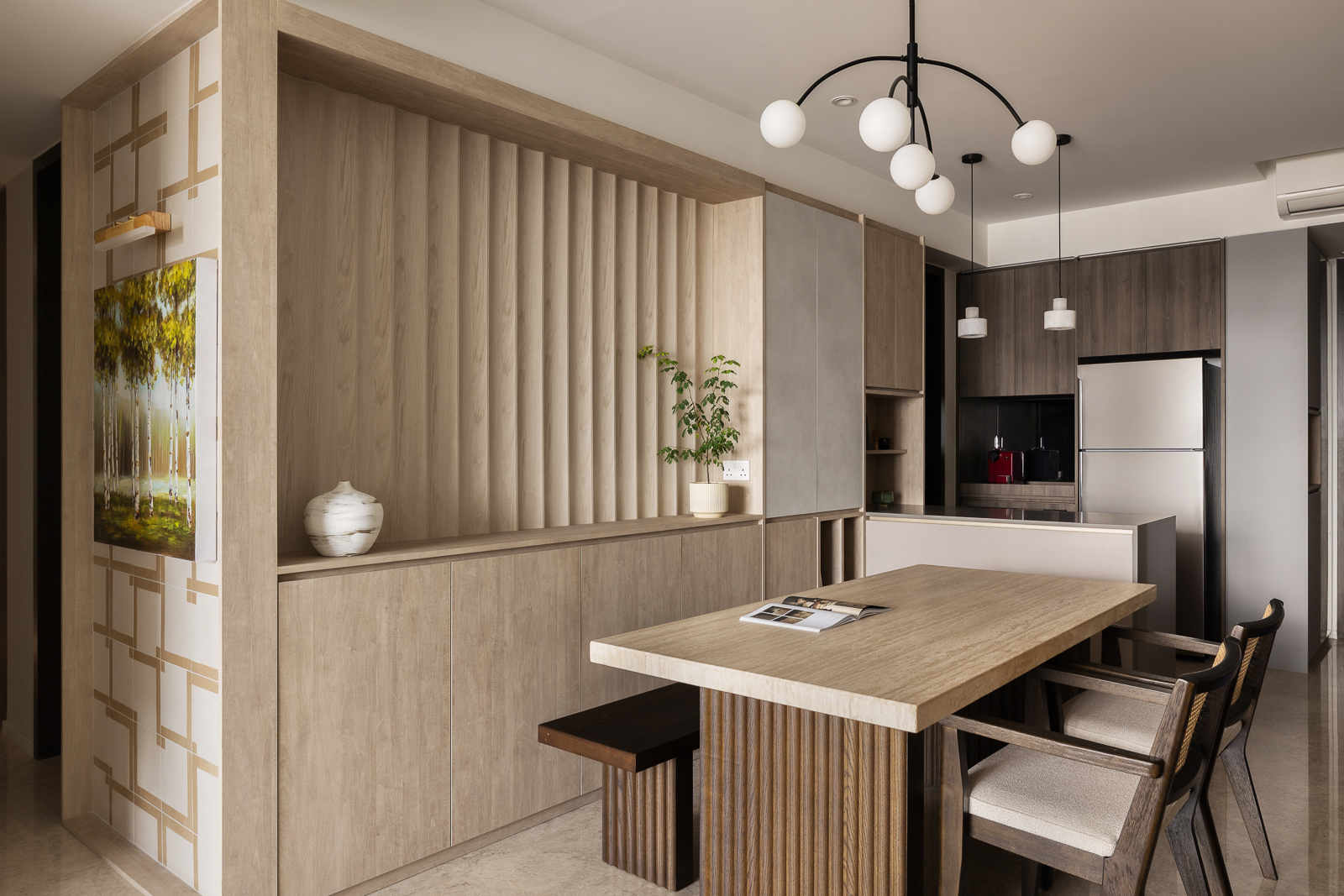
The surfaces you choose during renovation don’t just cover your walls; they shape the atmosphere of your daily life. Every home is built from a layered mix of materials, but the most considered interiors are anchored by one feature material that leads the design and sets the tone for everything else. In modern luxury interior design, this material choice is a language. Marble speaks of prestige. Timber whispers of warmth. Terrazzo announces creative confidence.
At The Interior Lab, we’ve guided hundreds of Singapore homeowners through this material conversation.
We know that the right feature material is the foundation of a home’s design narrative, and choosing it well is the difference between a beautiful space and one that feels yours authentically.
Here is a definitive guide to understanding feature materials and how they define your home’s character.
A feature material is the single dominant visual element that anchors the aesthetic direction of a home. It introduces character, establishes the atmospheric weight of an interior, and sets the tone that the rest of the palette responds to.
Unlike secondary materials, paint finishes, soft furnishings, metal accents, and supporting surfaces, which complement the anchor, the feature material leads the design narrative. The most common choices are timber and natural stone, though engineered surfaces like sintered stone, hand-plastered finishes, and large-format porcelain are increasingly used in their place.
When you select your feature material, you are choosing the primary voice of your home’s design story. It influences how daylight reflects throughout the afternoon, how the room feels underfoot, and the level of refinement your property exudes.
Feature materials are typically used in the following areas:
We generally advise against using your feature material on movable furniture pieces such as side tables and dining chairs. The whole point of having one dominant material is that it leads, and if you repeat it across every surface, including the furniture, the layering collapses and the home loses its sense of hierarchy.
If your dining table features the same bold marble veining as your kitchen island and living room feature wall, the space can start to feel repetitive instead of thoughtfully curated.
Moveable furniture pieces look best when they introduce contrasting textures, soft bouclé fabrics, supple leathers, or slim metallic details that let the feature material remain the hero.
Dominant feature materials are part of the permanent architecture of your home, including walls, floors, ceilings, cabinetry, kitchen islands, and countertops. Furniture is the exception, not the rule, with a substantial dining table occasionally counted in when it’s built into the architectural composition.
Achieving a sophisticated look in your property starts with selecting the one feature material that will define your home’s design direction.
In modern luxury interior design in Singapore, the choice of surface dictates how your home handles light, space, and the tropical climate.
Here is a close look at the most sought-after options, what they look like, and the unique atmospheric qualities they convey for your residence.
|
Feature Material |
Common Variations |
Visual Characteristics |
How It Shapes Modern Luxury Interiors |
|
Timber |
Light, dark, straight-grain, cathedral-grain |
Natural grain patterns ranging from pale oak to rich walnut |
Introduces warmth, texture and depth while balancing stone, glass and metal finishes. |
|
Marble |
Carrara, Calacatta, Statuario |
Smooth surface with distinctive natural veining |
Creates elegant focal points and adds timeless sophistication to living spaces, kitchens and bathrooms. |
|
Stone & Concrete Finishes |
Microcement, concrete-look finishes |
Matte, textured surfaces with subtle tonal variation |
Softens the overall palette and creates a refined architectural backdrop with understated luxury. |
|
Terrazzo |
Fine or coarse aggregate finishes |
Speckled stone, marble, or glass fragments |
Introduces craftsmanship, texture, and visual interest while maintaining a contemporary aesthetic. |
|
Travertine |
Filled, honed, or brushed finishes |
Warm ivory tones with natural surface texture |
Adds sculptural warmth and timeless character to feature walls, flooring and countertops. |

Light woods encompass timber species such as white oak, ash, and maple, featuring pale cream, soft beige, and sandy undertones, as featured in the 4BR condo above.
They display understated grain patterns.
When applied to large surface areas, light wood reflects natural daylight beautifully, creating a bright, airy environment that feels expansive and peaceful.
They convey a sense of calm serenity, organic warmth and understated luxury, perfect for creating a relaxing, sanctuary-like environment within a bustling city.
In modern luxury interior design, light woods create a calm, refined backdrop that allows natural stone, metallic accents, and architectural lighting to stand out. They also complement adjacent styles such as Japandi and Scandinavian interiors, where warmth and simplicity are equally valued.

Dark timber finishes, such as walnut, smoked oak, and teak, are prized for their rich chocolate, espresso, and deep brown tones.
In the modern luxury home above, dark timber is used across the wall panelling and bespoke cabinetry to create a warm, sophisticated backdrop while adding depth and architectural character to the space.
These timbers possess substantial visual weight. When integrated into your home, they absorb light, creating an intimate, cosy and highly sophisticated atmosphere.
They convey a feeling of timeless permanence, refinement, and elegance, enhancing your private studies, walk-in wardrobes, and formal dining spaces.
Dark timber is a defining feature of many modern luxury interiors, introducing depth, contrast, and warmth to spaces such as living rooms, studies, and walk-in wardrobes. It also works well in mid-century modern, wabi-sabi, and industrial-inspired homes.

Linear and straight-grain woods are selected or cut to display parallel, uniform lines running consistently along the length of the timber panel, as shown in the 3BR condo kitchen above.
This material offers a highly ordered, geometric look that appeals to minimalist preferences. It avoids the curves of traditional woodcuts, providing a streamlined silhouette that guides your eyes across a room.
This material conveys precision, order, and forward-thinking elegance, establishing a visual rhythm across expansive cabinet doors and feature walls.
In modern luxury homes, straight-grain timber reinforces clean architectural lines and creates a refined, uncluttered appearance. It also complements minimalist and Scandinavian interiors that favour simple forms and understated detailing.
Cathedral-grain timber features distinctive arching, flame-like patterns created when timber is flat-sawn, revealing the tree’s natural growth. The expressive grain introduces natural movement and variation, giving each panel a unique appearance that celebrates the authenticity of the material. Unlike straight-grain timber, cathedral grain creates a softer, more organic visual rhythm that naturally draws the eye.
In modern luxury interiors, cathedral-grain timber adds warmth, texture, and depth to feature walls, bespoke cabinetry, and statement joinery without overwhelming the overall design. Its distinctive grain brings character to larger surfaces while maintaining a refined aesthetic. Beyond modern luxury homes, it also complements rustic, farmhouse, and mid-century modern interiors where the natural beauty of timber is an important design feature.
Marble remains a classic emblem of opulent living, celebrated for its smooth, polished, or honed surface and distinctive natural veining. From the soft grey ribbons of Carrara to the rich golden tones of Calacatta, each slab is formed naturally over thousands of years, giving every installation its own unique character. Its reflective surface helps bounce light around a space, contributing to the bright, refined appearance often associated with modern luxury interiors.
Marble conveys prestige, timeless beauty, and sophistication, making it one of the defining materials of modern luxury interior design. Its natural veining and elegant finish make it a popular choice for feature walls, kitchen islands, flooring, and bathrooms, where it creates a strong visual focal point without overwhelming the overall design. It also complements Classical and Art Deco interiors.
Stone and concrete finishes, such as limestone, microcement, and concrete, offer a tactile alternative to highly polished surfaces. Their matte appearance diffuses light instead of reflecting it, creating a softer and more understated atmosphere. Low-sheen finishes and subtle surface textures introduce depth while celebrating the natural character of the material.
These finishes bring an earthy, minimal aesthetic that suits homeowners who appreciate understated luxury and gallery-inspired interiors. In modern luxury interior design, stone and concrete finishes introduce texture and visual balance, particularly when paired with warm timber, soft lighting, and refined architectural details. They also complement Wabi-Sabi, Mediterranean, and industrial-inspired interiors.
Terrazzo is a composite material in which chips of marble, quartz, granite, or glass are embedded in a cementitious or polymeric base before being ground and polished to a smooth finish. Its distinctive mosaic of scattered aggregates introduces texture, colour, and visual interest without overwhelming the overall design.
Terrazzo conveys a sense of bespoke artistry, creative charm, and tactile interest, making it well suited to feature walls, flooring, powder rooms, and kitchen backsplashes. Its historic association with grand 1920s cinema foyers makes it a natural fit for modern interpretations of Art Deco. In modern luxury interior design, terrazzo introduces texture and craftsmanship while maintaining a refined, contemporary aesthetic. It also complements eclectic, contemporary Mediterranean, and Art Deco interiors.
Travertine is a form of terrestrial limestone characterised by its unique fibrous appearance and natural, elongated cavities formed by geothermal springs.

Usually presented in warm cream, walnut, and ivory tones, it can be left unfilled for a raw, rugged texture, or filled and honed for a silky finish.
Travertine conveys an atmosphere of classic luxury and sculptural warmth, bringing a beautiful tactile quality to your feature walls and patio spaces.
Travertine has become a popular feature material in modern luxury interiors because of its warm tones, subtle texture, and timeless appeal. It also pairs well with minimalist, contemporary Mediterranean, and Italian-inspired homes.
Selecting and coordinating these exceptional feature materials requires a thoughtful approach to your space’s design philosophy.
At The Interior Lab, we specialise in curating materials that match your lifestyle and elevate your property to the highest aesthetic standards.
We know how to identify the one feature material that suits your lifestyle, then layer it with complementary textures, bespoke timber against polished stone, and matte finishes beside reflective ones to create a home that’s harmonious and uniquely yours.
Ready to explore your feature material options? Contact The Interior Lab for a free 30-minute design consultation. Speak with our material specialists about your space, climate challenges, and aesthetic goals.
Singapore’s humidity causes natural timber to expand and contract, which requires backing substrates and expansion gaps when used as full-height cladding, whereas natural stone remains dimensionally stable but must be treated with breathable anti-fungal sealants to prevent moisture-induced staining.
Avoid placing harsh, direct spotlights in front of highly polished stone, as it creates mirror glare. Instead, use grazing or wall-washing illumination from ceiling tracks to accentuate structural contours without surface reflection.
Filled travertine has its natural pits filled with a matching-colour resin, creating a flat surface that is easy to wipe down. Unfilled travertine leaves its cavities exposed, offering a magnificent raw texture but requiring regular vacuuming to prevent dust buildup.
We apply a 70/30 compositional rule in which one material serves as the background shell (e.g., light oak timber wall panelling covering 70% of the surface area) while the secondary material acts as a singular, high-contrast anchor (e.g., a massive marble island block occupying the remaining 30%).
 BACK TO BLOG