



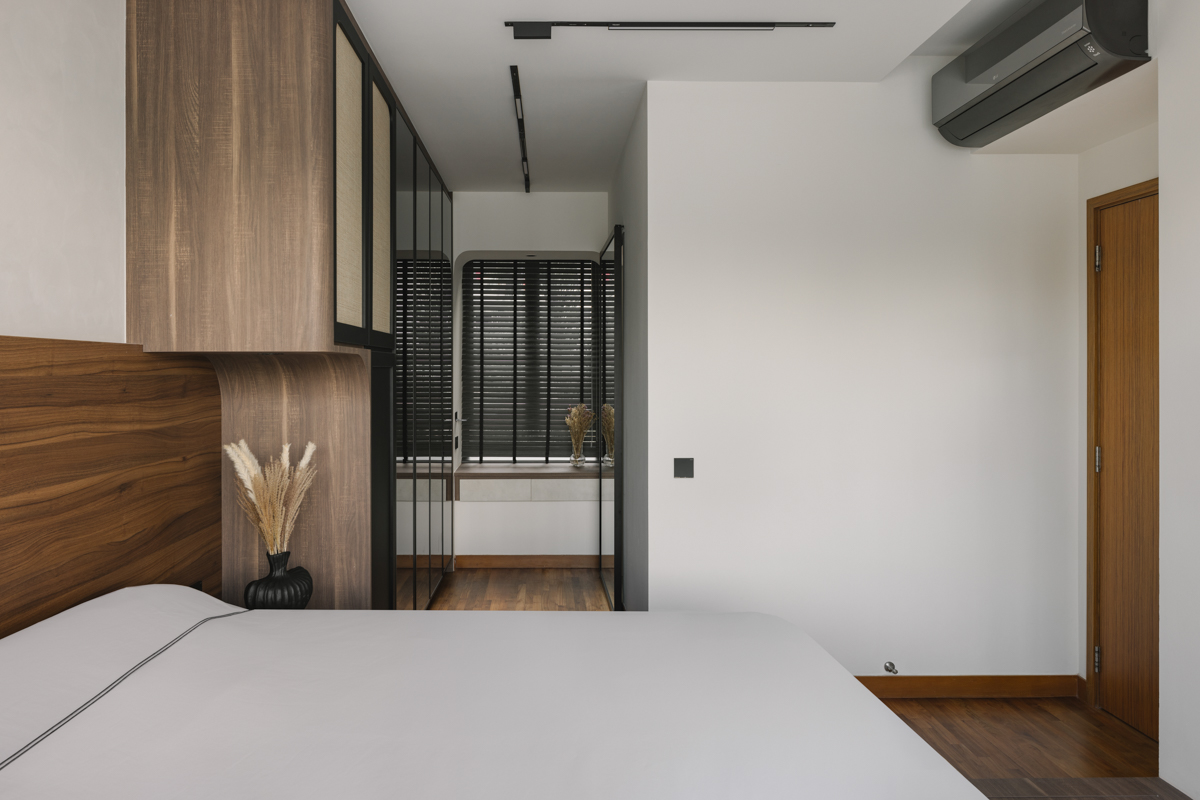
A well-planned bedroom is not only about how it looks. In condo interior design, it also needs to support how you live day to day — how you store your clothing, move around the room, and keep the space feeling calm rather than crowded. That is why wardrobe planning deserves more attention than it usually gets.
In many Singapore homes, bedroom space is limited, so a wardrobe cannot be treated as an afterthought. The right solution should make good use of the room, complement the overall design, and suit your daily routine. A built-in wardrobe often does this better than a freestanding piece, but the next decision matters too: should it have hinged doors, sliding doors, or evolve into a walk-in layout?
This guide breaks down the differences clearly, so you can choose a wardrobe setup that works for your bedroom, your storage needs, and your condo interior design as a whole.

A built-in wardrobe is usually the most practical starting point for a condo bedroom. Unlike a freestanding unit, it is designed specifically for the particular room, allowing it to be tailored to the wall length, ceiling height, and layout of the space.
That makes it easier to reduce awkward gaps, use vertical storage more effectively, and create a neater visual finish.
This is especially relevant in condo interior design, where every part of the room has to work harder. A full-height built-in wardrobe can turn an ordinary wall into a highly efficient storage zone while still feeling integrated with the bedroom design. It can also be detailed to match the rest of the room, whether the look is understated and minimal or more decorative and layered. Source
From a design perspective, built-in wardrobes also feel more intentional. Instead of looking like furniture added later, they can be incorporated into the room’s architecture. That often gives the bedroom a calmer and more cohesive feel, which is especially important in smaller homes where visual clutter builds up quickly.
Once you have decided on a built-in wardrobe, the next question is usually the door style.
Sliding and hinged doors are two common ways a built-in wardrobe can open. Each of these options offers distinct functions and advantages, and isn’t just chosen for how they look:

Hinged doors are the more traditional option.
They open outward, relying only on hinges for their movement. Because of this, they’re much easier to install than sliding doors, which will need tracks.
Hinged doors will need clearance space to open, however. If your bedroom has enough clearance space in front of the wardrobe, hinged doors can be a straightforward option for homeowners.

Sliding doors move along a track, so they do not need the same outward clearance. That makes them especially useful in narrower condo bedrooms where furniture sits close to the wardrobe.
However, sliding doors are a bit more complicated to install than hinged doors. Hinged doors only need hinges, but sliding doors need a track mechanism to slide open.
Sliding doors also need a bit more maintenance than hinged doors, as the sliding mechanism can get stuck.

A walk-in wardrobe is a different kind of decision. Unlike sliding or hinged doors, which are door styles, a walk-in wardrobe is a layout strategy.
It creates a dedicated dressing area you can step into. It is less about the door mechanism and more about how the room is planned.
In a condo, a walk-in wardrobe can work beautifully when the master bedroom is generous enough, or when there is an adjoining area that can be turned into a dressing zone. It can give you more flexibility for shelves, hanging sections, drawers, mirrors, and lighting, while making the morning routine feel more organised and private.
However, a walk-in wardrobe is only worth doing if the layout supports it. In a smaller bedroom, carving out a walk-in zone can reduce the usable sleeping area too much.
A walk-in wardrobe should feel purposeful, not forced. If it is too tight to move around comfortably or too shallow to plan properly, it may be inconvenient for daily life.
As a general rule, the standard wardrobe depth for hanging clothes is around 600mm.
For a built-in wardrobe with hinged doors, you also need enough clear floor space in front of the doors for them to open comfortably without clashing with the bed, bedside table, or walkway. That is why hinged wardrobes tend to work better in bedrooms with a little more breathing room.
Sliding wardrobes are usually easier to plan in tighter rooms because the doors stay within the wardrobe’s footprint. They may need a slightly deeper build to accommodate the track system, but they often save more usable circulation space overall.
A walk-in wardrobe needs more than just storage depth. It also needs a comfortable internal walkway and enough room for the layout to accommodate dressing. If you are planning cabinetry on both sides, the space should accommodate the clearance of the cabinets’ doors.
If your priority is to maximise storage and create a bedroom that feels tailored to the space, a built-in wardrobe is usually the strongest starting point.
From there, the choice between hinged and sliding doors depends largely on the room layout.
The key is to choose a wardrobe setup that works naturally with your room, storage habits, and condo interior design.

A wardrobe should not be disconnected from the rest of the bedroom. The most successful built-in wardrobes feel like they belong to the room through their proportions, finishes, and detailing. This can be done in different ways depending on the design direction.
In a quieter, more minimal bedroom, flush panels, recessed pulls, or handle-less doors can help the wardrobe blend more cleanly into the wall. In a more decorative interior, the wardrobe may use framed panels, moulding, or richer finishes to echo the rest of the room. Tinted glass, integrated lighting, and tailored internal compartments can also elevate the wardrobe from a basic storage unit into a more refined design feature.
Lighting matters more than many homeowners expect. Internal wardrobe lighting improves visibility and accentuates the wardrobe, giving that section of the room a more premium appearance. Lighting can highlight display shelves, add warmth to the bedroom, and also provide ample illumination for getting dressed.
Material selection matters too. It is worth discussing practical carcass and finish options with your designer so the wardrobe withstands heat and humidity—both of which you’ll get plenty of in Singapore’s climate.

When planning a wardrobe for a Singapore condo, the design should respond not only to style but also to local living conditions. Humidity, ventilation, and day-to-day maintenance all matter, especially in enclosed bedrooms where airflow may be more limited.
This does not mean wardrobe planning has to be complicated. It simply means the design should be approached properly from the start, especially if a walk-in layout, new partitions, or more involved spatial changes are being considered.
A wardrobe should do more than hold your clothes. In a well-designed condo bedroom, it should support the way you live, make the room easier to use, and feel fully integrated with the rest of the space.
At The Interior Lab, we design built-in wardrobes and bedroom storage solutions with the full room in mind — from layout and circulation to finishes, lighting, and everyday practicality. Whether your home calls for sliding doors, hinged doors, or a walk-in wardrobe, the goal is always the same: to create a bedroom that feels cohesive, refined, and easy to live in.
If you are planning your next condo interior design project, speak to The Interior Lab about a wardrobe solution tailored to your space.
Not always, but built-in wardrobes usually make better use of wall length and ceiling height, which is especially helpful in condo bedrooms where space is tighter, and storage needs to be planned more carefully.
No. Sliding wardrobes are often associated with cleaner, more contemporary spaces, but the door mechanism itself can be adapted to different finishes and styles. The design language comes from the detailing and material choices, not just the fact that the doors slide.
Yes, if the layout genuinely allows for it. A walk-in wardrobe works best when there is enough room for both storage and comfortable internal movement. If the space is too limited, a standard built-in wardrobe may be the more effective choice.
It depends on the scope of work. For strata-titled residential properties, homeowners may need to check MCST requirements and relevant authority guidelines, especially for layout changes or more involved renovation work.
 BACK TO BLOG