



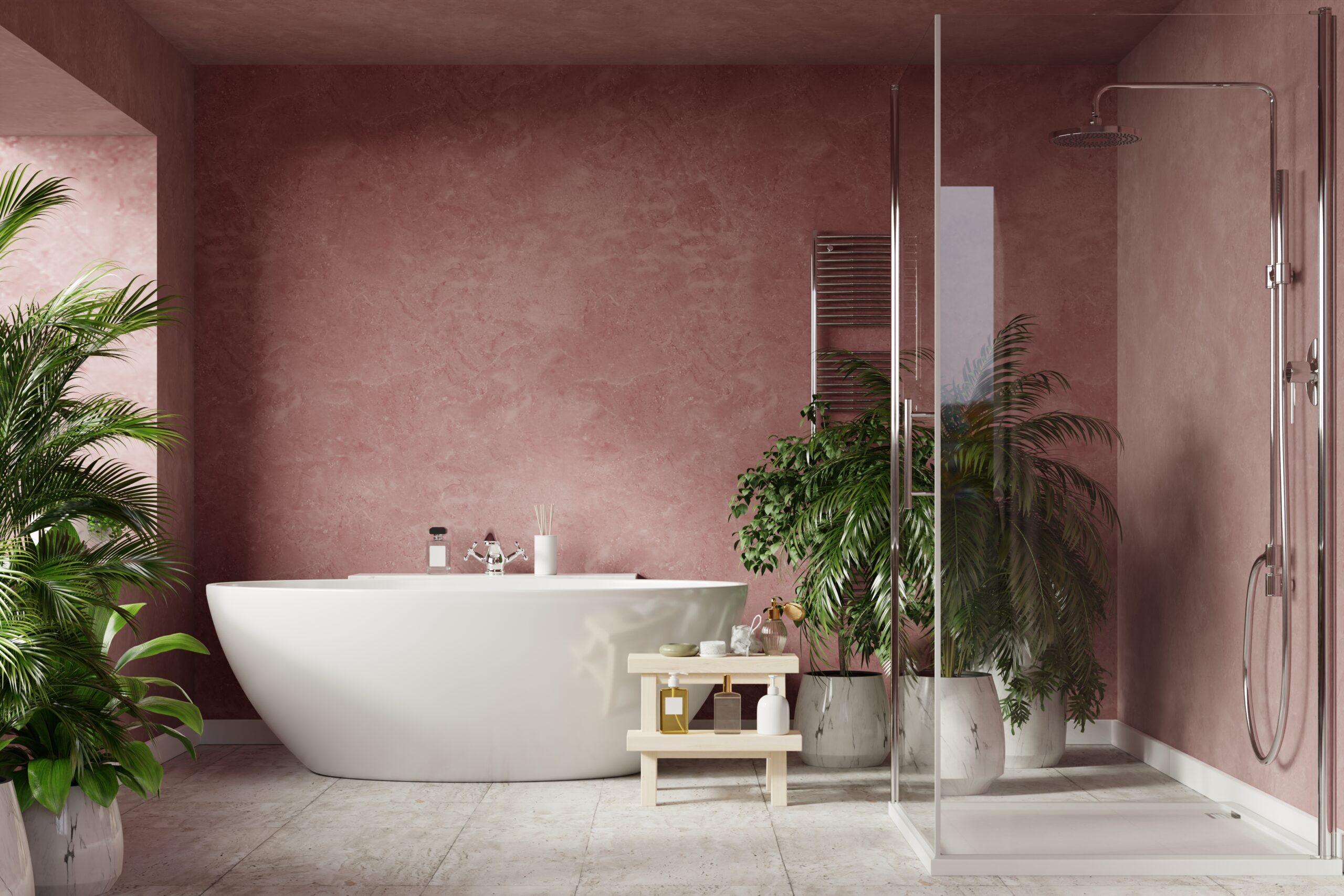
Microcement has become a popular choice for renovations in Singapore, especially for bathrooms, kitchens, and feature walls. But it isn’t right for every space. Good renovation interior design starts with matching the material to the space, not the other way around.
Microcement is a thin coating of cement, resins, and additives that creates a seamless finish. Unlike tiles or paint, it bonds directly to existing surfaces, eliminating the grout lines that break up a tiled finish and giving the space a more minimalist look.
It can go over walls, floors, countertops, and even existing tiles without removal, which suits space-limited HDB flats and condos.
Skipping tile removal saves time, keeps dust contained, and, in condos, reduces disruption to neighbours. It also works over damaged or uneven surfaces that would otherwise need costly repairs first.
Singapore’s heat and humidity, along with coastal salt air in homes closer to the sea, mean microcement behaves differently here than in temperate climates, with faster sealant degradation and stricter curing needs.
A bathroom’s humidity profile varies by unit and estate. A condo balcony wall behaves nothing like an internal feature wall. Landed homes with roof exposure add further variables.
Generic installation guidelines don’t account for this, so assessing each space individually is essential.

Microcement’s seamless surface avoids the grout lines where water settles, and mould can build up over time. Proper sealing is key: quality sealants create the waterproof barrier Singapore’s humidity demands.
In compact HDB bathrooms, the seamless finish makes rooms feel larger and removes the grout joints where dirt and mould collect, an advantage when humidity regularly exceeds 80 percent.
On walls, it withstands splash zones better than painted surfaces, which eventually bubble and peel from moisture.
Bedrooms, living rooms, and kitchens benefit from microcement’s contemporary finish without the maintenance demands of wet areas. In condos and landed homes, accent walls add sophistication without overwhelming the room.
These lower-moisture applications need less intensive sealing than bathrooms, with occasional dusting and a light reseal every few years being enough.
Neutral tones (soft greys, warm beiges, taupe) suit bedrooms especially well, adding design interest without consuming floor space or requiring structural change.
Microcement flooring looks striking in photos, but daily foot traffic visibly wears it over time: scratches, heel marks, and scuffs from furniture being moved. Repairs also show more than a swapped tile would.
For 4-room HDB flats with limited separate spaces, this matters, since the main living area usually serves multiple functions. Larger 5-room units or landed homes with separate zones have more flexibility to reserve microcement for bedrooms or low-traffic areas. For open-plan living and dining spaces, polished concrete, large-format tiles, or epoxy flooring hold up better.
Singapore’s intense tropical sun degrades sealants faster than indoor conditions, and salt spray near the coast accelerates this further. Even well-sealed exterior microcement typically needs recoating within a few years, well ahead of the same finish protected indoors.
Outdoor maintenance is also impractical: algae, bird droppings, and dirt require regular cleaning, and power washing or harsh scrubbing damages the sealed surface. Large-format porcelain tiles, natural stone, or specialised exterior coatings are more reliable choices for balconies, patios, and exterior walls.
Microcement needs a smooth, structurally sound base. It doesn’t bridge structural problems; it just masks them temporarily, and cracks will reappear through the surface over time.
Severely damaged substrates need repair first: replastering, fixing cracked concrete, or levelling compounds, all of which add cost and time. For HDB flats with older, cracked walls or condos with water damage, an early honest assessment prevents costly mistakes later.
Microcement suits minimalist, industrial, and Scandinavian design movements. Neutral palettes (soft greys, warm beiges, off-whites) complement natural light and work well in HDB and condo layouts. Darker, richer tones are also gaining traction for dramatic feature walls in bedrooms and accent spaces, adding impact without the heaviness of paint.
The seamless finish suits smaller units, like 3-room HDB flats, where fewer visual elements make spaces feel larger. It also bridges styles well. Raw finishes echo concrete in industrial spaces, matte finishes suit minimalist schemes, and understated tones work well in Scandinavian-influenced homes. Its minimal application waste and long lifespan also appeal to sustainability-conscious homeowners.
Before any microcement project begins, here’s what we factor in:
Regular resealing (every 1–2 years in bathrooms, less often on feature walls) protects water resistance. Use gentle, pH-neutral cleaners; acidic or abrasive products degrade the sealant. In bathrooms without good ventilation, sealant tends to break down noticeably earlier than in well-ventilated spaces, sometimes within the first year and a half.
Good exhaust ventilation and airflow support the material’s mould resistance, especially in compact HDB bathrooms. Repairs are possible but may show slightly at the patch line, an acceptable trade-off for some homeowners and a dealbreaker for others. Overall, maintenance stays modest and manageable compared to tile upkeep, such as grout cleaning and replacement.
In bathrooms, microcement holds up well over the long term when properly cared for, resisting mould and lasting many years before a full refresh is needed, which offsets the ongoing resealing cost against the cost of avoided grout and tile repairs. For feature walls, return depends more on overall design execution than the material itself.
Landed homes with larger renovation scopes may use microcement in bathrooms and feature walls for a cohesive look. In resale properties, a well-executed microcement bathroom can strengthen the home’s overall design impression, provided the installation quality is high. Poor execution, on the other hand, tends to work against the space.
Material outlay is generally in line with mid-tier tile finishes, with skilled installation forming the bulk of the investment. In many cases, this is balanced by avoiding tile removal and disposal, which streamlines the project overall.
Microcement suits bathrooms, feature walls, and select kitchen applications across HDB, condo, and landed homes. It’s not right for high-traffic flooring, outdoor areas, or damaged substrates.
Getting this right is part of good renovation interior design: an honest, space-by-space assessment that weighs your climate, lifestyle, and willingness to maintain against the material’s strengths.
Considering microcement for your next renovation? Speak to The Interior Lab for a space-by-space assessment with one of our designers, tailored to how you live and how your home is built.
Yes, in most cases. The existing tiles are cleaned, primed, and then coated in microcement, so there’s no need for removal. This is especially useful in HDB bathrooms, where tile removal can be messy and time-consuming.
In bathrooms and other wet areas, every 1 to 2 years. On feature walls and in lower-moisture spaces like bedrooms, resealing is needed far less often, sometimes not for several years.
Small marks can usually be sealed and blended in. Larger cracks or chips need patching, and because microcement is a continuous coating rather than individual tiles, the patch may be faintly visible. This is worth discussing with your designer if the space sees heavy daily use.
It can, provided the walls or floors are in decent condition first. Flats with significant cracking or uneven surfaces need repair before microcement is applied; the underlying issues will eventually show through.
 BACK TO BLOG