



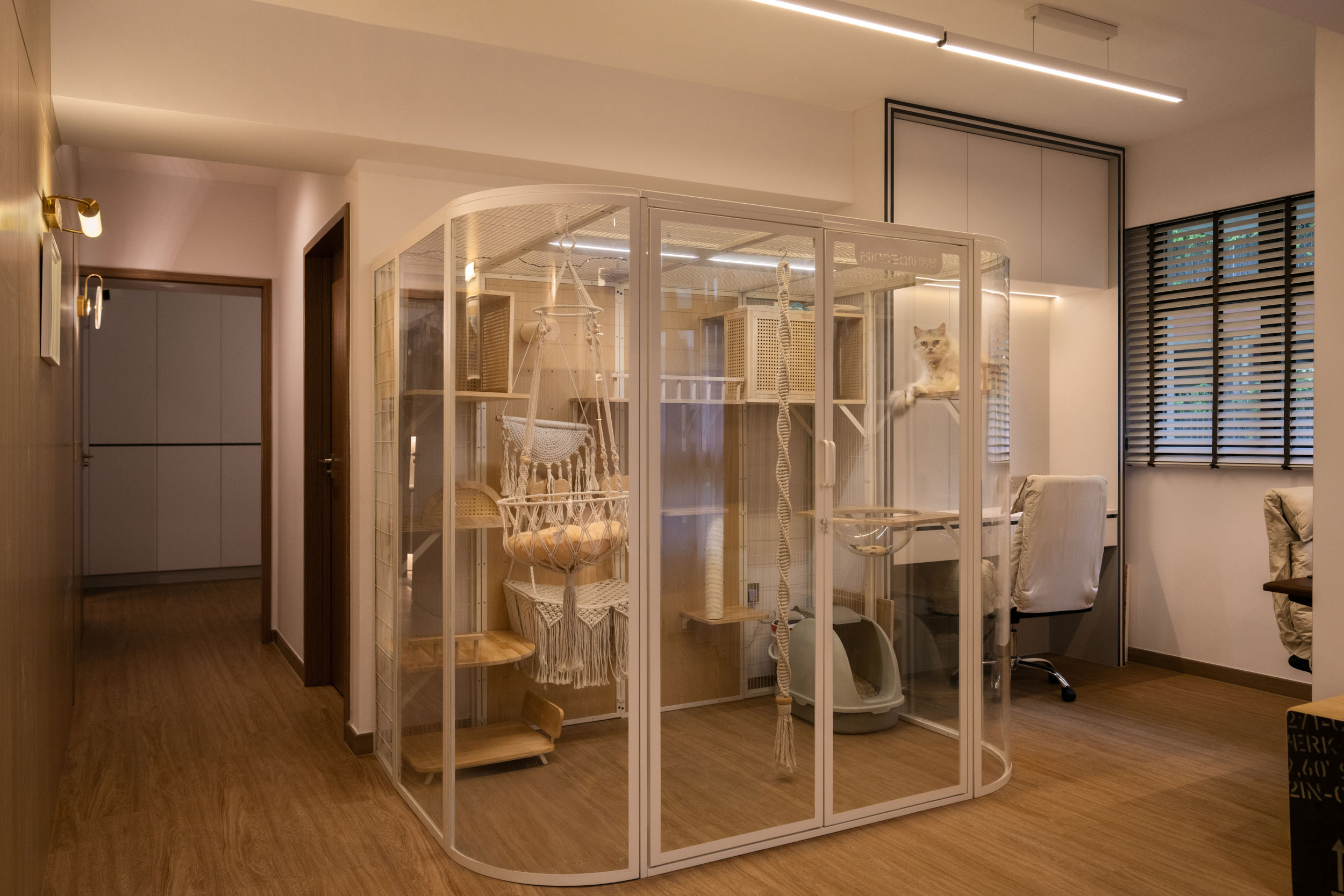
Homeowners looking for the best interior design that Singapore often want more than a beautiful home. They want a space that works hard every day, fits their lifestyle, and feels planned in every detail. If you live with pets, you need to plan for feeding, grooming, cleaning, storage, and movement from the start.
At The Interior Lab, we believe a pet-friendly home should never feel like an afterthought. Your home can still look refined, calm, and well put together while providing your pets with a safe and comfortable environment. The key is to design built-in pet zones that feel like part of the home rather than loose add-ons placed wherever there is space.
In smaller homes, this matters even more. You are often working with a tighter layout, more defined wet areas, and a stronger need for clever carpentry. A loose feeding mat in the walkway, an exposed litter tray in the dining area, or an improvised wash point in the bathroom can quickly make the home feel cluttered. Built-in solutions fix that.
Here is how you can plan concealed feeding stations, ventilated litter cabinets, and pet wash bays in a practical, polished, and everyday-use way suited to life in Singapore.
In smaller homes, every zone has to earn its place. That is why built-in pet features tend to work better than temporary setups.
A built-in feeding station keeps bowls in one fixed location. A concealed litter cabinet reduces visual clutter. A proper wash bay helps contain mess before it spreads through the home. When these features are planned together with your layout, storage, and finishes, the result feels neater and more intentional.
This is the same design thinking we apply across our residential interior design projects at The Interior Lab. Whether we are planning integrated storage, concealed doors, lighting, or custom carpentry, the goal is always the same: to shape the home around how you actually live.
For pet owners, that means asking practical questions early:
When these questions are addressed during renovation planning, your home works better from day one.
Before you commit to any built-in feature, make sure the design meets the property’s official renovation guidelines. This matters most when your pet zone involves wet works, flooring changes, repositioning elements or building near sensitive areas.
In practice, this means your pet-friendly ideas should never be treated as stand-alone add-ons. They should be part of a proper renovation plan.
At The Interior Lab, experience makes a real difference. A well-designed pet zone is not just about carpentry. It is also about layout logic, wet-area planning, safe materials, and making sure the solution is realistic for your home type.
Not every pet owner needs all three features. The right combination depends on your pet, your routine, and your flat layout.
|
Pet zone |
Best for |
Ideal location |
Main benefit |
|
Built-in feeding station |
Cats, dogs, multi-pet homes |
Service yard, kitchen end panel, dining side niche |
Keeps feeding tidy and contained |
|
Ventilated litter cabinet |
Cat owners |
Quiet corner, dining carpentry, utility niche |
Hides litter area and improves visual neatness |
|
Pet wash bay |
Dog owners, active pets, and at-home grooming |
Service yard or bathroom-adjacent zone |
Makes cleaning easier and keeps mess contained |
If you have cats, your priority may be a litter cabinet and a calm feeding corner. If you have dogs, especially those that go out often, a wash bay may bring the biggest daily benefit.
In multi-pet households, zoning becomes even more important so feeding, litter, and washing do not overlap awkwardly.
A feeding station sounds simple, but its placement has a huge effect on how your home feels.
We often find that the best locations are low-traffic areas such as the service yard, the end of a kitchen island, the side of a dining cabinet, or a recessed nook near the kitchen. These spots keep bowls accessible without placing them in the middle of the circulation path.
A well-designed feeding station should include more than just a gap for bowls. A few details to plan for:
If you want a cleaner overall look, custom carpentry can conceal supplies while keeping everything within reach. This suits compact homes especially well, where visual clutter can quickly affect the feel of the whole space.
The most common mistake is putting the feeding zone wherever there is leftover space. That usually leads to bowls in walkways, awkward cleaning, and a setup that feels temporary. A built-in version works best when planned as part of the kitchen or service yard design.

Many homeowners want to hide the litter box, but not every concealment solution is effective.
A litter cabinet should do three things well. It should give your cat privacy, reduce visual mess, and be easy for you to clean. If any one of these is missing, the design will become frustrating very quickly.
Good litter cabinet design starts with ventilation. Without proper airflow, smells build up fast in Singapore’s humid climate. The cabinet also needs enough internal clearance for your cat to enter, turn, and use the tray comfortably. Access for scooping and cleaning should be simple, not awkward.
Some of the best locations include:
Just as importantly, the litter cabinet should be clearly separated from the feeding zone. That sounds obvious, but it is often overlooked in smaller homes.
At The Interior Lab, we approach this the same way we plan any concealed storage feature. This is exactly what we did with our 861 Jurong West project. The storeroom under the stairwell was cleverly transformed into a secluded space for their pet cat, finished off with a mini door flap for easy access.
The outside should look seamless, but the inside must still work well in everyday use. A beautiful cabinet that is hard to clean is not a successful design.

If you groom or bathe your dog at home, a dedicated wash area can make a real difference.
Instead of bringing dirt into the house or having to adapt your bathroom every time, you have a fixed spot designed for the task. The service yard is often the most practical location because it is easier to clean and keeps mess away from the home’s dry areas.
A useful pet wash bay should include:
Some homeowners also prefer an elevated wash platform for comfort, while others need a lower entry point for older or larger dogs. The best option depends on your pet’s size and mobility.
Pet-friendly design is not only about layout. Material selection matters just as much.
In our projects, we always look at how a home will be used over time. For pet zones, that usually means choosing finishes that are easy to clean, less prone to visible wear, and more comfortable for your pets to use every day.
A few practical choices include:
This is also where a professionally planned scheme comes in handy. Your home should still feel cohesive. Pet features should blend with the rest of the material palette rather than stand out jarringly.
The most successful pet-friendly homes are not built on a single feature. They work because the supporting details are handled properly.
That may include:
These are the kinds of details that lift a home from functional to thoughtfully designed.

A pet-friendly home should support your daily routine without making the space feel busy or compromised. Built-in feeding stations, ventilated litter cabinets, and pet wash bays can do exactly that when properly planned.
The key is to treat them as part of the overall renovation, not as isolated features. When layout, carpentry, materials, and maintenance are all considered together, the result feels natural, elegant, and easy to live with.
At The Interior Lab, we approach every home this way. We look beyond trends and focus on how you live, what your space needs, and how thoughtful design can make everyday routines smoother.
If you are planning a pet-friendly home renovation in Singapore, built-in pet zones are one of the smartest ways to create a home that works beautifully for both you and your pets.
Yes, built-in pet zones can work very well in a compact home when they are planned around your daily routine and available floor space. A feeding station can keep bowls neatly tucked away, a litter cabinet can make the area feel more discreet, and a wash bay can simplify clean-up after walks or grooming.
The key is to design these features so they feel integrated into the home rather than added on as an afterthought.
The best location is usually somewhere easy to access but out of the main walkway, such as near the kitchen, service yard or dining area. This helps keep feeding practical without creating clutter or a trip hazard. If possible, choose a spot with durable, easy-to-clean finishes, especially if your pet tends to splash water or scatter food.
They can, provided they are designed properly. A well-planned litter cabinet can make the area look tidier and help contain stray litter, but it should still have good ventilation and enough internal space for your pet to move comfortably. It is also important that the cabinet is easy to open and clean, otherwise it may become inconvenient for both the pet and the owner.
A pet wash bay can be very useful, especially for owners of dogs or long-haired pets that need regular cleaning. It gives you a dedicated spot for rinsing paws, bathing your pet and handling minor clean-ups without using the main bathroom every time. That said, it is most worthwhile if you have enough space and the plumbing is planned correctly from the start.
Start with your pet’s habits, size and daily needs. A small feeding nook may be enough for one pet, while multi-pet households may need separate zones for feeding, litter and washing. You should also consider ventilation, storage, water access, ease of cleaning, and whether the materials can withstand scratches, moisture, and frequent use.
If plumbing or built-in carpentry is involved, it is also wise to check that the work complies with local building and renovation requirements.
 BACK TO BLOG