



For many years, colour was often seen as the defining feature of interior design. Bold feature walls, contrasting palettes, and statement colours were commonly used to create visual impact within a space. Today, however, many contemporary interiors are shifting towards a softer and more restrained approach — one where texture, rather than colour, becomes the main element shaping the atmosphere of the home. Read on and find out how much of a difference it makes when materials are beautifully curated.
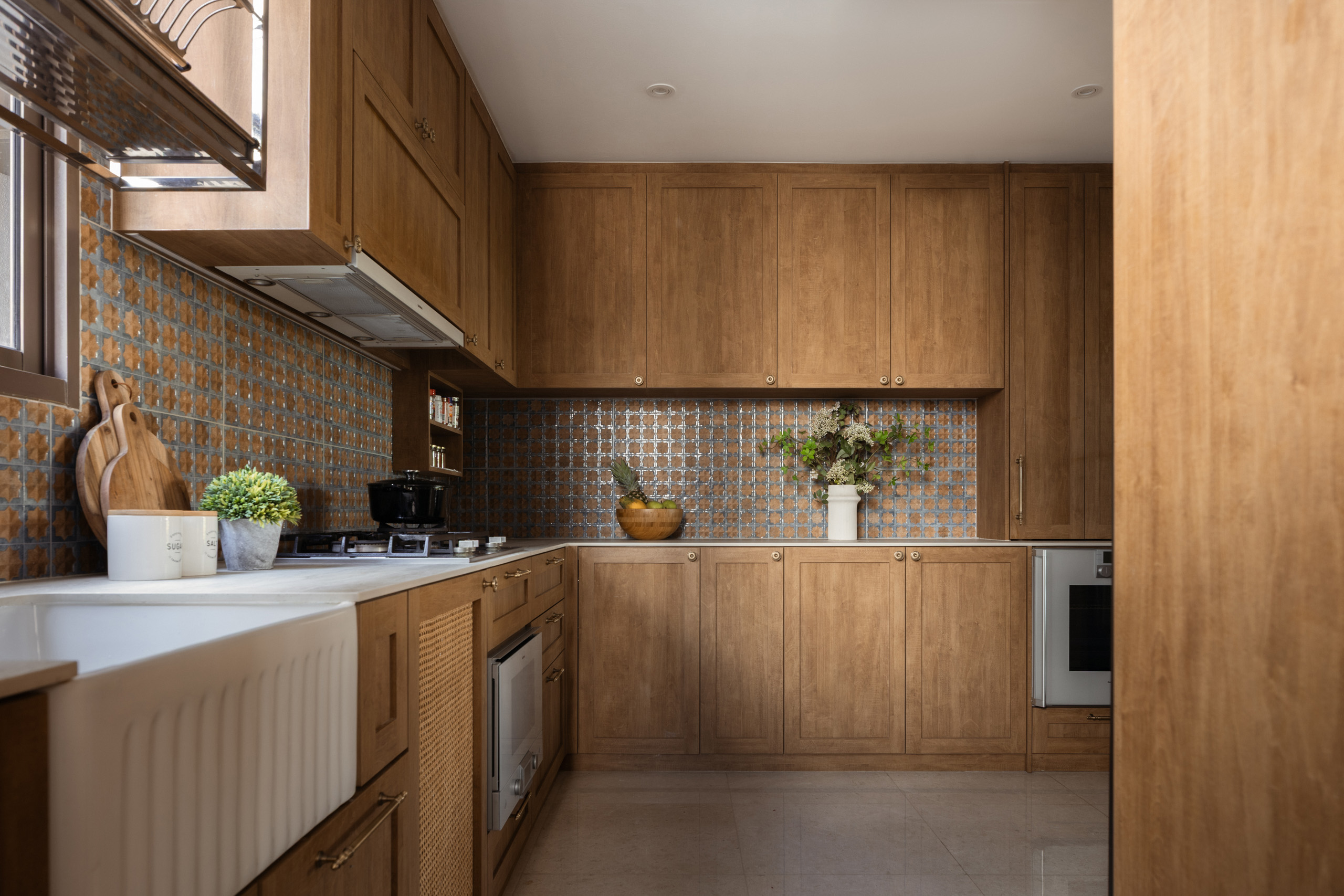
As seen in this modern Indian kitchen, textures bring warmth and character into the space without overwhelming it visually. Rich wood-grain cabinetry introduces a grounded and timeless quality, while the patterned backsplash tiles add rhythm, movement, and artisanal depth throughout the kitchen. The combination of tactile materials creates a layered environment that feels warm, lived in, and deeply comforting — qualities often difficult to achieve through colour alone.
Natural textures also soften the functionality of the kitchen, transforming it from a purely utilitarian space into one that feels welcoming and intimate. The subtle imperfections within the timber grains and handcrafted tile surfaces interact beautifully with natural light, allowing the kitchen to feel visually dynamic throughout the day.
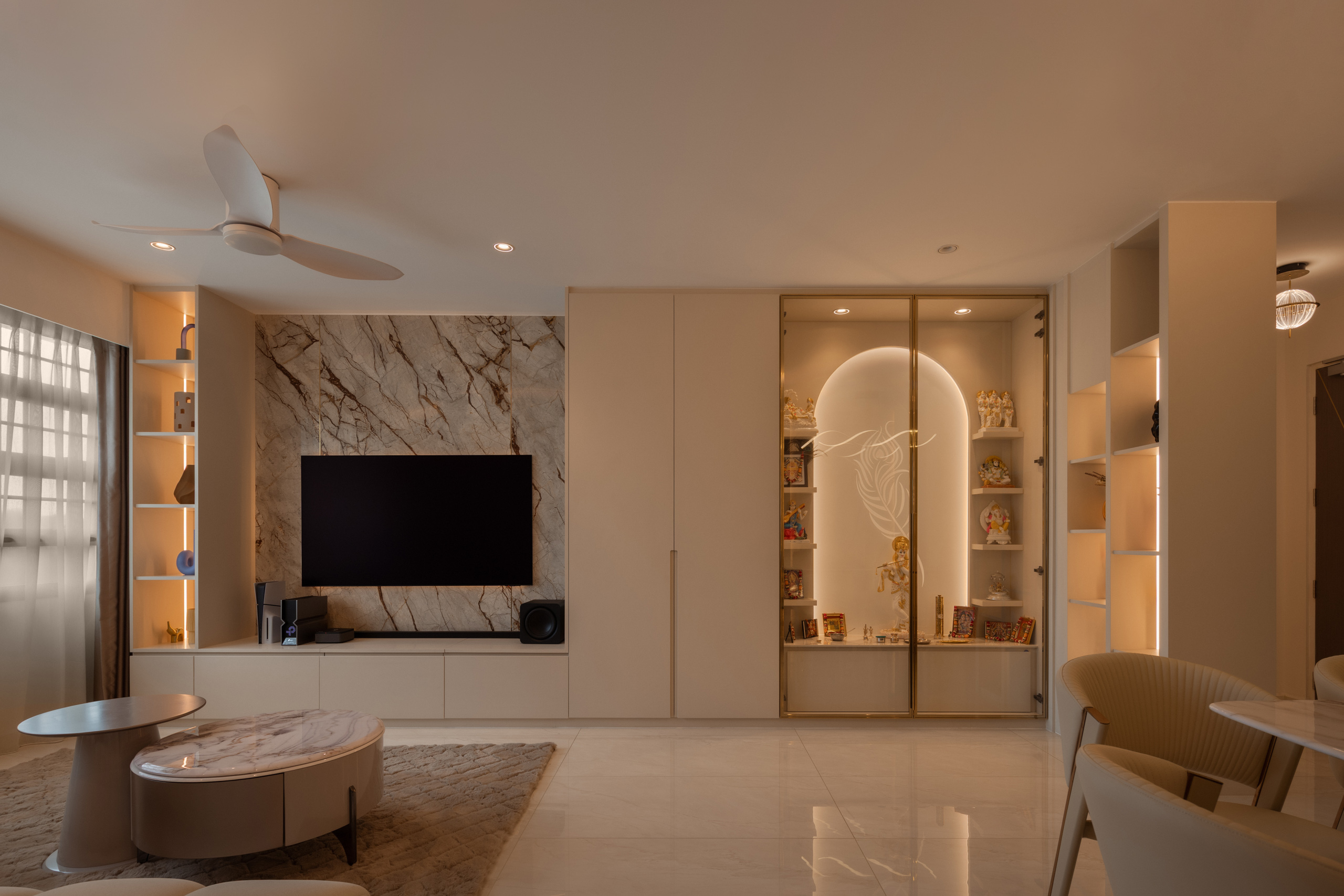
In this living space, texture becomes the focal point that shapes both atmosphere and visual depth. The dramatic marble surface behind the television introduces natural veining that feels expressive yet refined, while the surrounding matte finishes and softly illuminated niches balance the richness of the material palette. Rather than relying on bold colours, the space achieves a sense of quiet luxury through contrast in textures — polished stone against smooth cabinetry, soft fabric upholstery against reflective surfaces, and warm ambient lighting that gently softens the overall composition.
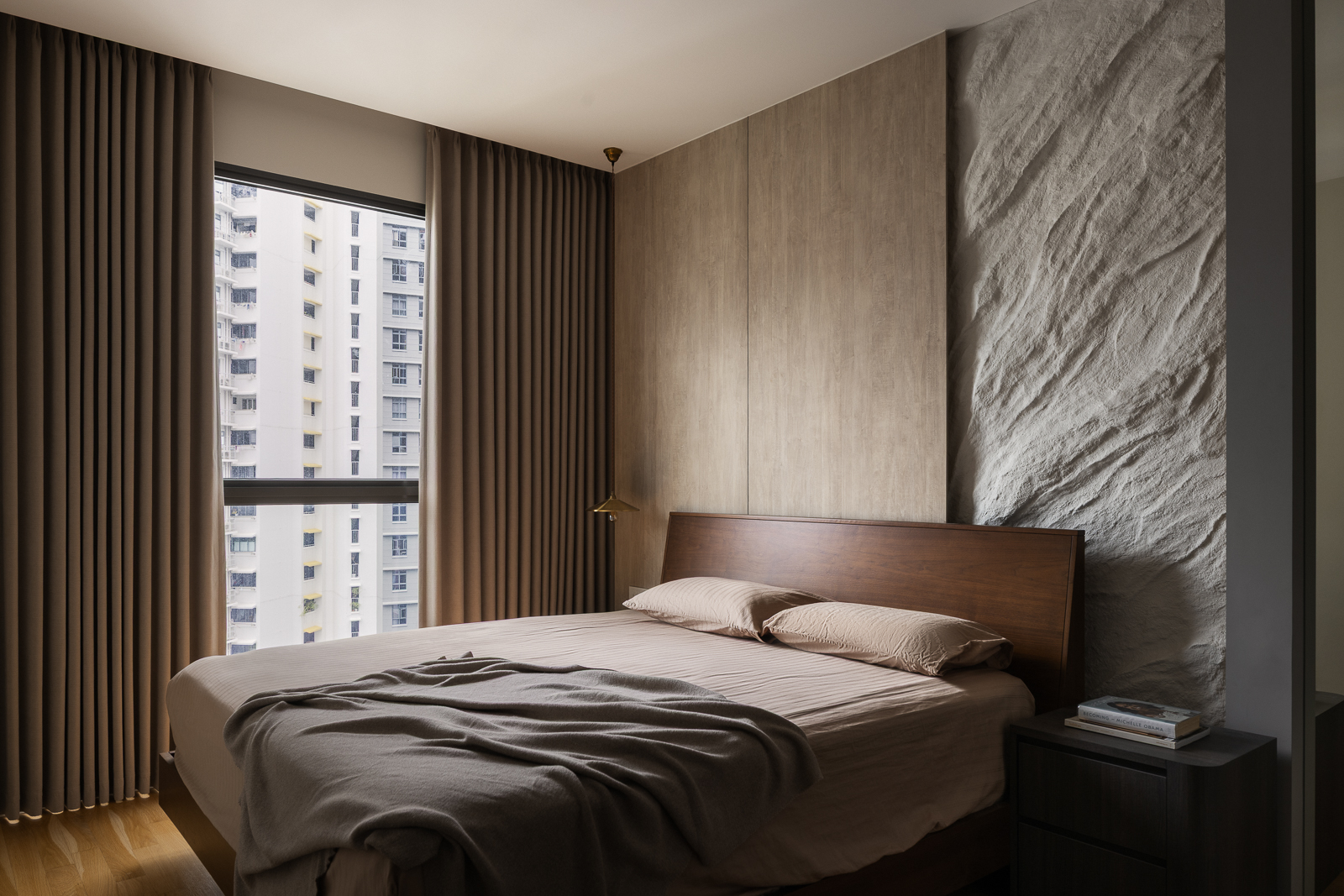
The sculptural textured wall introduces an almost stone-like quality to the space, bringing movement and dimension into an otherwise restrained palette. Paired with warm timber tones, soft bedding, and heavy drapery, the room feels layered and cocoon-like without the need for bold visual statements.
The tactile materials also influence how light is experienced within the space. Natural daylight grazes softly across the textured surfaces, revealing shadows and depth that shift gently throughout the day. This interplay between texture and lighting gives the bedroom a calming sensory quality, allowing the interiors to feel intimate, grounded, and emotionally comforting.

Another stunning example here is this modern luxury bathroom, where texture becomes the defining element that shapes the atmosphere of the space. Rather than relying on bold colours or decorative features, the design draws depth and warmth through the layering of stone-like surfaces, soft ambient lighting, and rich walnut-toned cabinetry. The veining within the tiles introduces a quiet movement across the walls, allowing the bathroom to feel visually immersive without appearing overwhelming. Paired with the warm concealed lighting, the textured surfaces take on a softer, almost velvety quality that changes subtly throughout the day.
As modern interiors continue shifting towards calmer and more intentional living, texture has become far more than a decorative element — it now plays a central role in shaping how a home feels emotionally. Through the layering of tactile materials, softened finishes, and ambient lighting, spaces are able to achieve warmth, depth, and visual richness without relying on bold colours or excessive styling.
In many ways, texture introduces a quieter form of luxury — one that feels understated, timeless, and deeply connected to everyday living. Whether through the warmth of natural timber, the softness of linen, or the depth of stone-like surfaces, these subtle details create homes that feel lived in, comforting, and sensory-driven. Ultimately, the most memorable interiors today are often not defined by colour alone, but by the atmosphere and emotional experience created through thoughtful materiality.
 BACK TO BLOG