



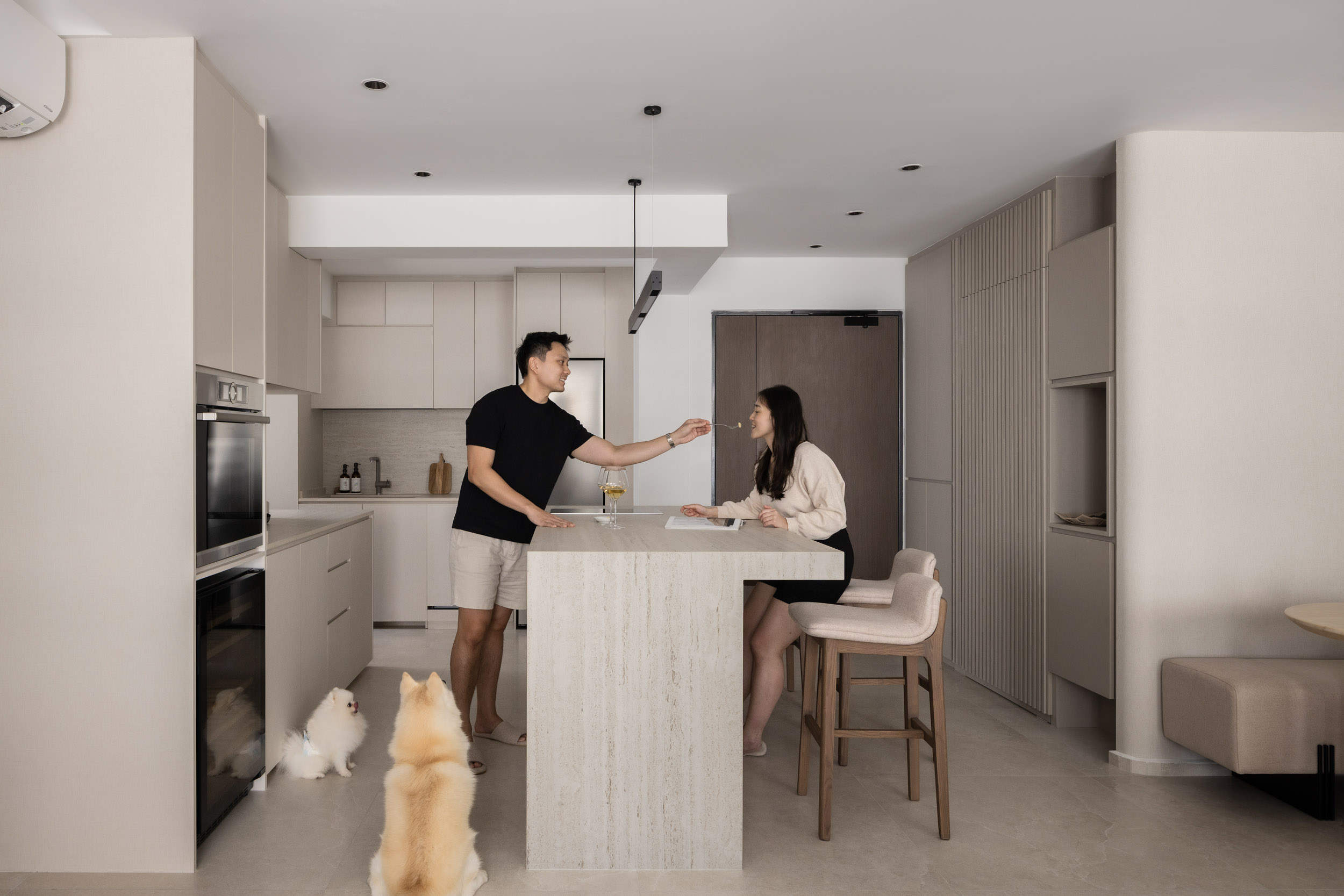
When people think about renovation in Singapore, the focus is often visual. Colour palettes, furniture styles, feature walls, and finishes usually take centre stage. A good home isn’t just about looks — it should feel comfortable to live in. At The Interior Lab, we design interiors that engage more than just the eyes. A well-considered renovation can stimulate sound, touch, light, and even scent, creating homes that feel calmer, warmer, and more personal.
Multi-sensory interiors are not about luxury gimmicks or complicated technology. They are about understanding how people live in their homes and designing environments that support comfort, focus, relaxation, and emotional well-being. In this article we’ll explore how multi-sensory design can be thoughtfully integrated into renovation in Singapore, whether for an HDB flat or a condominium, without overdesigning or exceeding practical limits.
Most renovation decisions begin with how a space will look. While aesthetics are important, they represent only one layer of the living experience. Sound levels, lighting comfort, material textures, and spatial flow all influence how a home supports daily routines.
In Singapore, where homes are often compact and urban noise is a reality, multi-sensory design becomes especially valuable. A renovation that considers these elements holistically can transform how a space feels without necessarily increasing cost or complexity.
Successful renovation in Singapore starts by asking not just how the home should look, but how it should feel throughout the day.

Visual comfort is still the foundation of interior design, but in multi-sensory spaces, it focuses on clarity and balance rather than visual impact alone.
Harsh contrasts and overly busy designs can cause visual fatigue, especially in smaller homes. Using a cohesive colour palette across connected spaces helps create smoother transitions and a sense of calm.
In renovation projects, this often means selecting complementary tones for walls, cabinetry, and flooring, rather than introducing too many competing finishes.
Lighting plays a critical role in visual comfort. Allowing natural daylight into the home through well-chosen window treatments supports healthy sleep-wake rhythms and improves mood during the day, while layered artificial lighting and effective light control ensure spaces can be comfortably darkened when rest is needed.
Artificial lighting should be layered to avoid glare and harsh shadows. Ambient lighting provides overall brightness, task lighting supports activities, and accent lighting adds depth without overwhelming the space.

Sound is one of the most overlooked elements in renovation in Singapore. Yet it has a significant impact on comfort, focus, and relaxation.
Soft materials help absorb sound and reduce echo, which is particularly important in open-plan layouts. Rugs, upholstered furniture, curtains, and acoustic panels can all improve sound quality without altering the structure.
Even cabinetry finishes and wall treatments can influence how sound travels within a space.
In multi-functional homes, especially those with work-from-home arrangements, creating quieter zones is essential. Strategic zoning, soft furnishings, and thoughtful layout planning help separate noisy and quiet activities without the need for additional walls.
This approach enhances both productivity and relaxation.

The sense of touch plays a subtle but powerful role in how comfortable a home feels. Texture influences emotional response just as much as visual design.
A well-designed interior balances smooth and textured surfaces. Hard finishes such as stone or laminate can be softened with textiles like fabric upholstery, cushions, and throws.
In renovation projects, this balance prevents spaces from feeling cold or overly rigid, particularly in modern interiors.
Material selection should consider how surfaces feel during everyday use. Matte finishes tend to feel warmer and more forgiving than high-gloss surfaces, while natural textures add depth and comfort.
These considerations are especially important in frequently touched areas such as handles, tabletops, and seating.
Atmosphere is the combined effect of sight, sound, and touch, shaping how a home supports emotional wellbeing.
Homes should offer spaces that support different emotional states. Calm zones benefit from softer lighting, muted colours, and minimal visual clutter, while active areas can handle slightly more contrast and energy.
Thoughtful renovation in Singapore considers how different rooms are used at different times of day and designs accordingly.
Personal touches such as artwork, meaningful objects, or custom features add warmth and identity. However, restraint is key. Too many visual or sensory elements can become overwhelming.
Multi-sensory design focuses on intentional choices rather than accumulation.
HDB flats come with specific layout constraints and renovation guidelines, but they are well-suited to multi-sensory design when planned carefully.
In smaller homes, sensory overload can happen quickly. Simplified layouts, integrated storage, and soft lighting help maintain visual and emotional balance.
Acoustic comfort is also crucial, as shared walls and corridors can contribute to noise issues.
Structural walls, wet areas, and service ducts limit what can be changed. This makes non-structural sensory upgrades especially valuable.
Lighting, materials, textures, and furnishings can all be adjusted without affecting compliance, making multi-sensory design a practical approach for renovation in HDB flats.
Condominiums often offer more flexibility in layout and finishes, allowing for greater exploration of sensory elements.
Open layouts require careful acoustic and visual planning. Soft furnishings, zoning, and layered lighting help maintain comfort without closing off spaces.
Material consistency across zones also supports a cohesive sensory experience.
While technology can enhance sensory comfort, it should never dominate the design. Smart lighting or sound systems should be integrated discreetly, supporting daily routines rather than drawing attention to themselves.
The table below highlights common sensory design elements and how they enhance Singapore homes.
|
Sensory Element |
Design Approach |
Everyday Benefit |
|
Lighting |
Layered and warm-toned |
Reduced eye strain |
|
Acoustics |
Soft materials and zoning |
Improved comfort |
|
Texture |
Balanced tactile finishes |
Increased warmth |
|
Layout |
Clear spatial flow |
Lower stress |
|
Materials |
Matte and natural surfaces |
Better daily usability |
Multi-sensory design works best when considered early in the renovation process.
Understanding how homeowners live, work, and relax informs every design decision. This ensures sensory elements support real needs rather than abstract concepts.
At The Interior Lab, we begin renovation projects by studying daily routines, preferences, and pain points.
Multi-sensory design requires coordination across lighting, materials, layout, and furnishings. Treating these elements as a unified system prevents mismatches and ensures consistency.
This holistic approach is what transforms standard home renovation into a more immersive and supportive living experience.
A well-designed home should do more than impress visually. It should feel comfortable, calming, and intuitive to live in. Multi-sensory interiors achieve this by addressing how spaces are experienced on multiple levels.
At The Interior Lab, we believe that thoughtful renovation in Singapore is about enhancing daily life through design choices that feel natural and enduring. By considering light, sound, texture, and atmosphere together, we help homeowners create spaces that truly support how they live.
If you are planning a renovation and want to explore how multi-sensory design can elevate your home, our team is always ready to guide you through ideas that balance creativity, comfort, and practicality.
Yes. In fact, small homes benefit greatly from sensory-focused design as it improves comfort without requiring additional space.
Not necessarily. Many sensory improvements involve thoughtful material and lighting choices rather than expensive installations.
Yes. Most sensory design elements such as lighting, materials, and furnishings do not affect structural components and are compliant.
Sensory considerations should be included at the initial planning stage to ensure consistency across design elements.
Multi-sensory design is rooted in human comfort and wellbeing, making it a lasting approach rather than a passing trend.
 BACK TO BLOG