



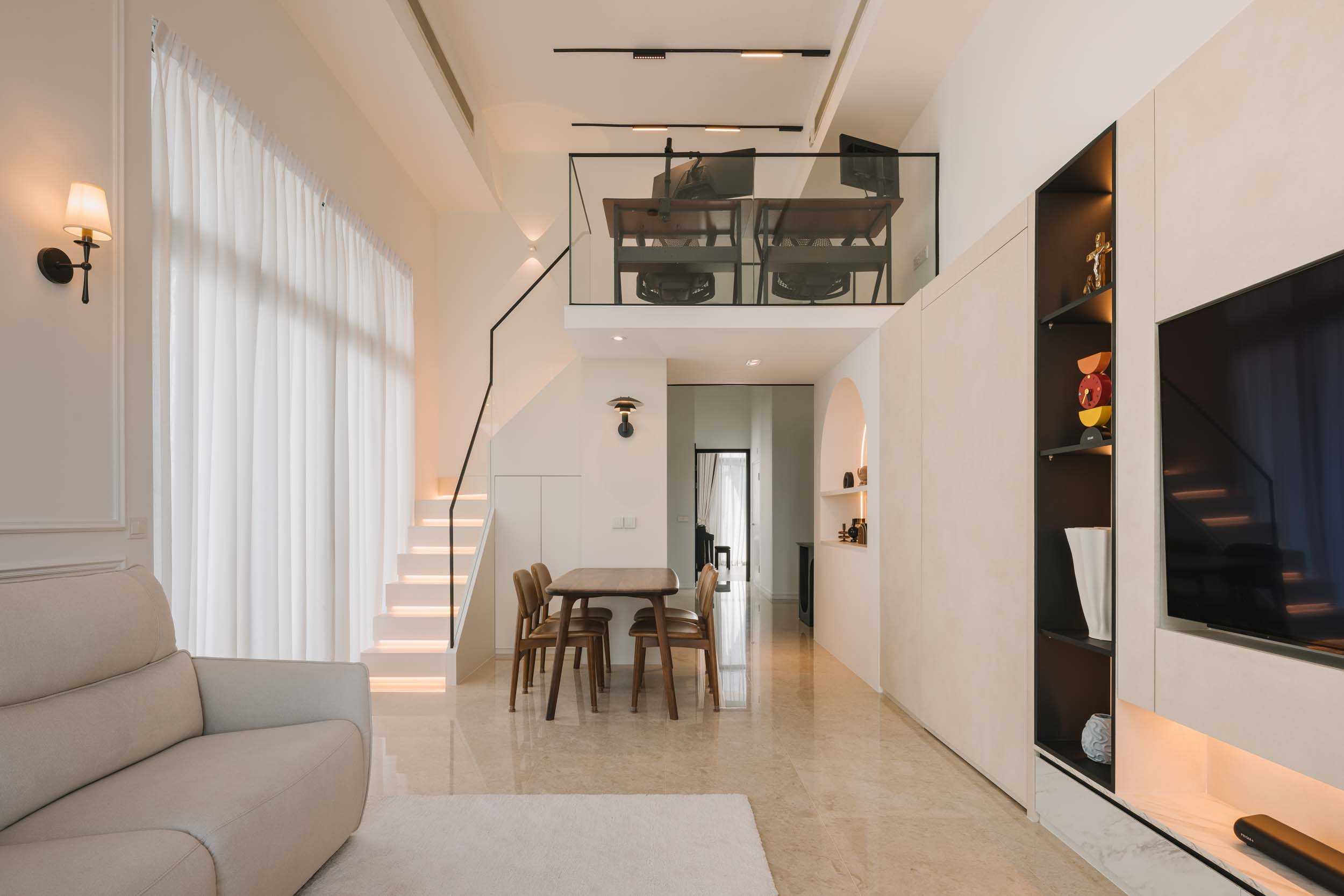
Luxury homes in Singapore aren’t just about looks anymore. Today’s homeowners expect their living spaces to support multiple aspects of daily life, from focused work and meaningful leisure to deep rest and relaxation. With evolving lifestyles and the growing importance of time spent at home, thoughtful spatial planning has become essential. At The Interior Lab, we believe that true luxury lies in how seamlessly a home adapts to its occupants, without feeling messy or overly complicated.
In this article, we explore how luxury interior design in Singapore can successfully accommodate work, play, and relaxation within a single cohesive environment. By examining zoning strategies, material choices, and planning principles, we also highlight how modern luxury interior design in Singapore balances elegance with everyday usability.
Luxury interior design in Singapore has evolved alongside changing lifestyles. Homes are no longer just places to unwind after a long day. They are now workspaces, entertainment hubs, and personal sanctuaries.
Rather than creating separate rooms for every function, modern luxury homes focus on clarity and adaptability. Spaces are designed to transition smoothly throughout the day, supporting different activities without visual clutter or discomfort.
The hallmark of successful modern luxury interior design in Singapore isn’t about adding more. It’s about making every detail purposeful.

Working from home has become a long-term reality for many households. In luxury interiors, workspaces must be efficient yet discreet, supporting productivity without disrupting the overall atmosphere.
Instead of isolating home offices, designers often integrate work zones into bedrooms, living spaces, or study corners. Built-in desks, concealed storage, and custom shelving allow work areas to blend into the surrounding interior.
When work is done, these spaces visually recede, maintaining the home’s relaxed and refined feel.
Luxury does not come at the expense of comfort. Proper desk heights, supportive seating, and well-planned lighting are essential for long-term use.
Task lighting should be layered with ambient lighting to reduce eye strain, while careful placement helps minimise distractions in shared spaces.

Play spaces in luxury homes are not limited to children’s rooms. They include entertainment areas, hobby zones, and social spaces designed for connection and enjoyment.
Luxury interior design in Singapore often incorporates entertainment zones within living or family areas. Media walls, custom cabinetry, and integrated storage support activities such as movie nights, gaming, or reading.
The key is subtlety. These features should enhance the space while allowing it to remain elegant and uncluttered when hosting guests.
Modern lifestyles change over time. Designing flexible play areas allows spaces to adapt without major renovation works.
A multi-purpose room may function as a yoga space today and a hobby room tomorrow. Furniture and storage solutions should support this adaptability while maintaining visual harmony.

Relaxation is central to luxury living. In a fast-paced city like Singapore, the home must provide moments of calm and restoration.
In luxury interior design in Singapore, bedrooms are designed as retreats rather than purely functional sleeping spaces. Soft lighting, calming colour palettes, and layered textures create an environment conducive to rest.
Clutter-free layouts and integrated storage further enhance the sense of calm and order.
Bathrooms play an increasingly important role in relaxation-focused luxury interiors. Thoughtful layouts, warm lighting, and the use of natural textures help transform daily routines into calming, restorative experiences rather than purely functional moments. In luxury interior designs, bathrooms are often treated as private retreats that support both physical comfort and mental ease.
Beyond the bathrooms, wellness in the home extends to quiet areas designed specifically for slowing down. Where space permits, dedicated wellness corners such as reading nooks, meditation areas, or small lounge zones provide moments of calm away from daily activity. These spaces support mental wellbeing and reinforce the idea that luxury living is not only about appearance, but about balance and intentional living.
Zoning is the foundation of multi-functional luxury interiors. It allows different activities to coexist without visual or spatial conflict.
Open-plan layouts are common in modern luxury interior design in Singapore. Visual zoning techniques such as lighting changes, ceiling treatments, or material transitions help define areas without closing them off.
These subtle cues guide movement and usage while preserving openness.
Luxury design also considers sound and mental separation. Soft furnishings, rugs, and upholstered elements help manage noise, especially where work and leisure overlap.
This ensures focus during work hours and comfort during relaxation.
Material selection plays a critical role in luxury homes that serve diverse purposes.
High-use areas such as workspaces and entertainment zones require materials that withstand daily wear. Engineered stone, quality laminates, and treated wood finishes offer durability without sacrificing elegance.
These choices ensure the home remains beautiful and functional over time.
Rather than using vastly different finishes for each zone, luxury interiors often rely on a cohesive palette with subtle variations. This maintains visual unity while allowing each space to express its function.
Lighting shapes how spaces are experienced throughout the day and is a key element of modern luxury interior design in Singapore.
A layered lighting approach combines ambient, task, and accent lighting. This allows spaces to transition easily from work mode to leisure or relaxation.
For example, brighter lighting may support daytime productivity, while warmer tones create a relaxed evening atmosphere.
Smart lighting systems enhance flexibility and control. Preset scenes allow homeowners to adjust lighting quickly, supporting different activities with ease.
This adds to the sense of luxury while improving everyday usability.
The table below outlines how different zones can be designed to support work, play, and relaxation effectively.
|
Zone |
Key Design Focus |
Resulting Benefit |
|
Work area |
Ergonomics and task lighting |
Improved productivity |
|
Play zone |
Flexibility and integration |
Enhanced connection |
|
Living space |
Visual zoning and comfort |
Balanced daily use |
|
Bedroom |
Calm palette and storage |
Better rest |
|
Bathroom |
Wellness-focused design |
Everyday relaxation |
A truly luxurious home supports every aspect of daily life without feeling divided or overwhelming. When work, play, and relaxation are thoughtfully planned, the home becomes a place of balance and ease.
At The Interior Lab, we approach luxury interior design in Singapore by understanding how homeowners live, work, and unwind. Through careful zoning, refined material choices, and forward-thinking planning, we create homes that are elegant, functional, and deeply personal.
If you are looking to bring together productivity, leisure, and rest within one cohesive space, our team is always ready to explore design solutions that reflect both your lifestyle and long-term vision.
Yes. Integrated furniture and discreet zoning allow workspaces to blend seamlessly into luxury interiors.
Flexible lighting, adaptable furniture, and clear visual zoning help spaces transition smoothly between functions.
Yes. It prioritises comfort, durability, and adaptability, making it ideal for family living.
Durable yet refined materials such as engineered stone, quality laminates, and treated wood work well.
Absolutely. Early zoning decisions influence layout, lighting, storage, and overall flow.
 BACK TO BLOG