



Luxury interior design in Singapore has shifted over the years. Instead of loud opulence and grand statement pieces, many homeowners now prefer a quieter kind of elegance that blends beauty with practical comfort. Spaces must feel luxurious yet warm and livable.
This is where the 2026 palette, texture, and form trends come in. They guide how interior designers create modern luxury spaces that are visually cohesive and functional, whether in HDB flats, condominiums, or landed homes.
The colour palette sets the tone for your home. It influences how each room feels and how well different spaces flow into one another.
Interior designers use colour to shape mood and support comfort. A well-planned palette can transform a standard unit into a cohesive, luxurious home.
The following palette trends are popular choices for injecting luxury and personality into any interior renovation.

Despite its association with warmth and rustic living, a wooden palette remains a leading choice in luxury interior design in Singapore.
This palette uses shades ranging from light beech to deep walnut, making it versatile for a range of home types, from landed properties to condominiums and HDB flats. Wooden tones create a grounded, welcoming base that pairs well with natural textures, soft furnishings, and sleek finishes.
A wooden palette is ideal for homeowners who want a harmonious blend of simplicity, warmth, and understated elegance.

Pastel palettes are gaining popularity in modern luxury interiors. Soft sage, dusty peach, muted rose, and pale blue offer a gentle, contemporary backdrop and a refreshing change from all-beige schemes.
These colours suit homeowners who want personality within a calm environment. Pastel palettes can feel playful yet refined, especially when paired with clean lines and well-chosen textures. Designers often use them to highlight certain zones or features, or to create a home that feels vivid without being overwhelming.

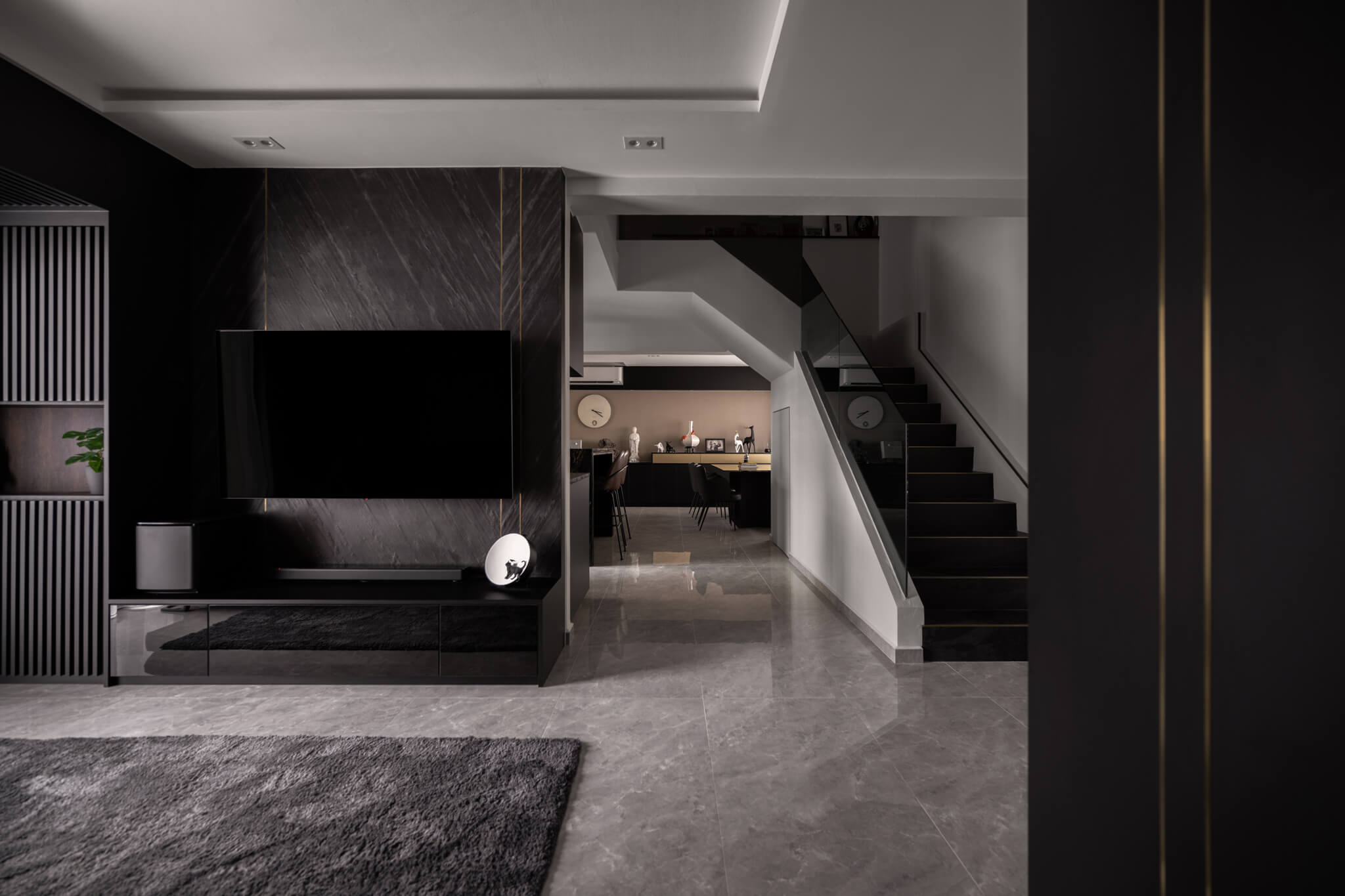
Dark, monochromatic palettes work well for homeowners who prefer a sleek, elegant interior. Charcoal, deep navy, and soft black build a strong visual base that feels sophisticated and modern.
This type of palette is popular in many luxury homes in Singapore, from condos to penthouses and larger HDB flats. The challenge lies in making the space feel rich and layered rather than flat or overly dim. Skilled interior designers use contrast, lighting, and texture to keep dark palettes bold yet comfortable.
Monochromatic schemes are also flexible. They can be tailored for different rooms and lifestyles, from cosy bedrooms to dramatic living areas.
Texture is a key component of modern luxury interior design. It adds dimension, prevents a neutral palette from feeling flat, and encourages a more tactile, inviting experience.
Natural textures like wood, stone, and rattan are often layered with smoother or glossier finishes to create balance. Luxury interior designers pay careful attention to how these textures interact, so the result feels cohesive rather than busy.
The following texture trends are timeless choices for adding the depth and complexity associated with luxury interior design. Expect to see more projects involving the following textures in 2026.

Wood remains central to luxury interiors. It adds warmth, stability, and a connection to nature. Wooden textures appear in flooring, cabinetry, furniture, and wall panels, giving even simple rooms a sense of richness.
Designers choose wood for its timeless appeal and versatility. Different grain patterns and tones can shift the mood from cosy and rustic to sleek and contemporary.

Rattan is well-suited to Singapore’s tropical climate and lifestyle. It brings a soft, relaxed touch while still fitting into modern luxury schemes. It’s ideal for balconies and alfresco areas, wherein the rattan harmonises with the open, pairing nicely with the sky and abundance of natural light.
Woven rattan works well in lounge chairs, dining seats, headboards, and cabinet inserts. It can also appear in decorative panels and storage features, where it provides a natural contrast to materials such as marble, glass, or metal. When used thoughtfully, rattan adds character without making the space feel overly casual.

Wood slats enhance walls, ceilings, and cabinetry by adding rhythm and visual interest. They create clean linear patterns that complement minimalist spaces and help elongate or frame key areas.
Beyond aesthetics, wood slatting can also soften acoustics by breaking up sound reflections, which contributes to a more comfortable, “softened” environment.
This is a great option for homeowners who like minimalism but still want a refined pattern to break up flat surfaces.

Marble is a classic luxury material that goes far beyond kitchen countertops. Its unique veining adds character and depth to walls, flooring, and tabletops.
In modern luxury interiors, marble is often used in living rooms, bathrooms, and feature walls to create a sense of timeless elegance. Homeowners who prefer easier maintenance can also opt for marble-looking tiles or engineered stone with a similar visual impact.
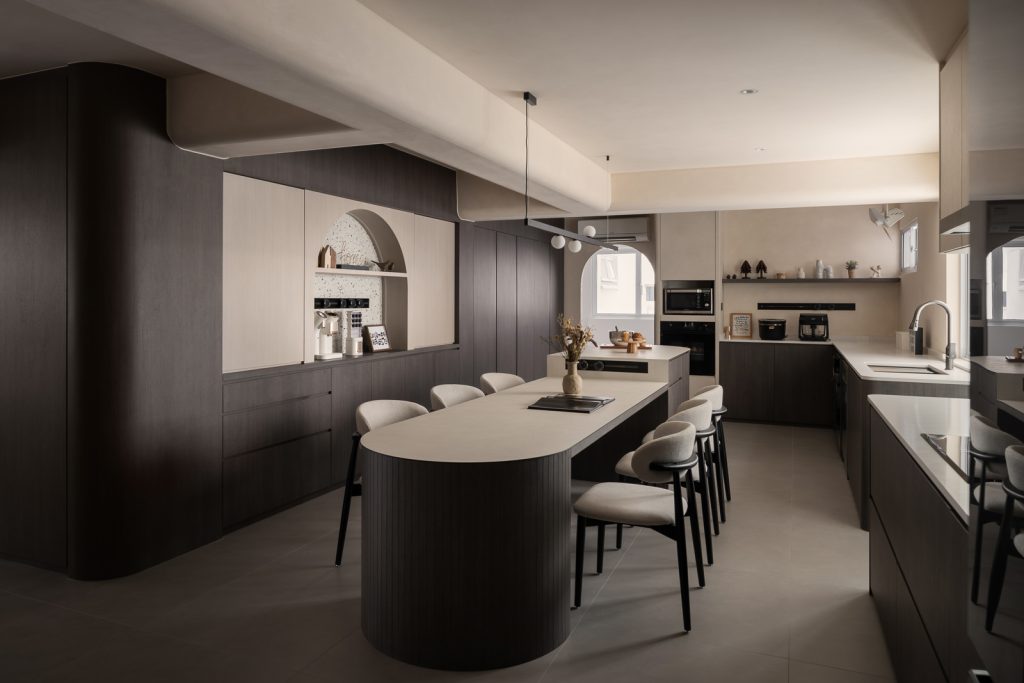
Matte textures offer a more subtle, understated kind of luxury compared to glossy surfaces. They diffuse light gently, creating soft, calm planes on cabinets, walls, and built-in furniture.
In modern homes, matte finishes are often used on carpentry fronts, wardrobe doors, and feature walls to achieve a smooth, contemporary feel. They pair well with both wooden and stone textures, helping to balance shine and shadow in a space.
Form in interior design refers to the use of geometry to give the room its visual structure. Examples of items where form shows up include:
As long as it has shape, it contributes to a room’s form.
Form is curated to draw and direct eyes across the room, creating a cohesive, harmonious flow. It’s also used to personalise and set a mood—for example, curved shapes are softer and feel more natural, whereas angular shapes are more striking and create uniformity.
Below are popular form directions in luxury interior design, which we can still expect to see plenty of in 2026.
Colours are not the only element that interior designers mix and contrast. Creating a contrast of geometric shapes—particularly with curved and straight lines—provides a captivating, eye-catching balance throughout the room.
The resulting blend of uniformity and eccentricity evokes personality in an otherwise uniform, luxury scheme.

In the TV area shown above, the project leveraged straight, vertical lines—making full use of wood slatting to establish vertical form. These straight lines are contrasted with the sculptures on the shelves, which are full of curves and roundness.
The result is a living room with a rich blend of shapes, evoking a non-uniform (and not bland, as a result) luxury that feels inviting.
A unique form in interior design is an artisanal shape that isn’t typically seen in furniture or cabinets, yet it exudes personality and vibrancy in a room. Unique forms can be found through decorative lighting (e.g., chandeliers), sculptures, and bespoke furniture, just to name a few.
Using these unique forms is excellent for curating a focal point for the room. They help set the room’s theme and dimensional direction.

In the example above, this unique form is introduced by the opulent chandelier. Its layers—similar to an upside-down tiered cake—create complexity, draw attention to the ceiling, and direct the eye downward, giving the room a sense of movement. Its vertical lines give the chandelier an ornate appearance, adding elegance to the lounge.
It’s not just a cherry on top. It anchors the room’s overall look.
Organic forms are shapes inspired by nature—think leaves, stones, branches, and petals. Unlike clean geometric forms (rectangles, perfect circles, straight lines), organic forms feel curved, irregular, and imperfect. That “unpolished” quality softens a space and makes it feel more relaxed and welcoming.
You can bring organic forms in through indoor plants, irregularly shaped décor, or furniture with free-flowing silhouettes.

Notice how this living room uses a pinecone-shaped feature light and a floral arrangement to introduce organic shapes into the rectangular room.
Organic forms don’t have to be literal plants, though they often are. The pinecone-inspired feature light is already an organic form on its own. Together, these elements make the room feel more inviting and natural, breaking up the rigidity of man-made lines.
In luxury interiors, reductive form is about using fewer silhouettes and keeping each one clean and intentional. By limiting the number of objects and prioritising simple, well-proportioned shapes, the room feels calmer, more spacious, and visually effortless.
The design below relies on just a few clear forms—a plump sofa, a two-blade ceiling fan, and a streamlined TV wall—to define the space.

What’s most striking is what isn’t included.
The absence of a coffee table, rug, extra shelving, and wall décor reduces visual “noise” and lets negative space do the work. Even the TV console is flushed into the wall instead of being a separate piece of furniture. With fewer competing forms, the composition feels cleaner, more open, and more intentional.
Luxury interior design is more than choosing expensive furniture. It is a thoughtful process that combines palette, texture, and form to create spaces that are elegant, comfortable, and suited to your lifestyle.
At The Interior Lab, we help homeowners refine their ideas, select suitable materials, and manage the renovation process from start to finish. With careful planning and attention to detail, we transform rooms into calm, contemporary, and luxurious spaces, whether in HDB flats, condos, or landed homes in Singapore.
If you want your home to reflect modern luxury and timeless beauty, contact The Interior Lab today, and let’s work on your dream interior.
Consider the mood you want in each space. Wooden palettes offer warmth, pastels create calm vibrancy, and dark palettes add drama and sophistication.
Texture prevents spaces from feeling flat. Natural textures like wood, rattan, and marble, or matte finishes, create depth and a tactile sense of luxury.
Interior design form determines the visual structure of the room, giving it its shape. Different shapes can be curated to craft a visual scheme. For example, a room with plenty of straight lines and geometric shapes introduces uniformity, whereas curved shapes add softness and calm. Unique shapes exude personality and character, and organic shapes make a room appear more natural and laid-back.
Luxury interior design can be adapted for all types of spaces. Designers can use palette, texture, and form to maximise space, create cohesion, and maintain elegance regardless of the unit size.
They guide the renovation process, help choose materials and furniture, and translate your vision into a functional, elegant, and harmonious home. Their expertise ensures a cohesive result tailored to your lifestyle.
 BACK TO BLOG