



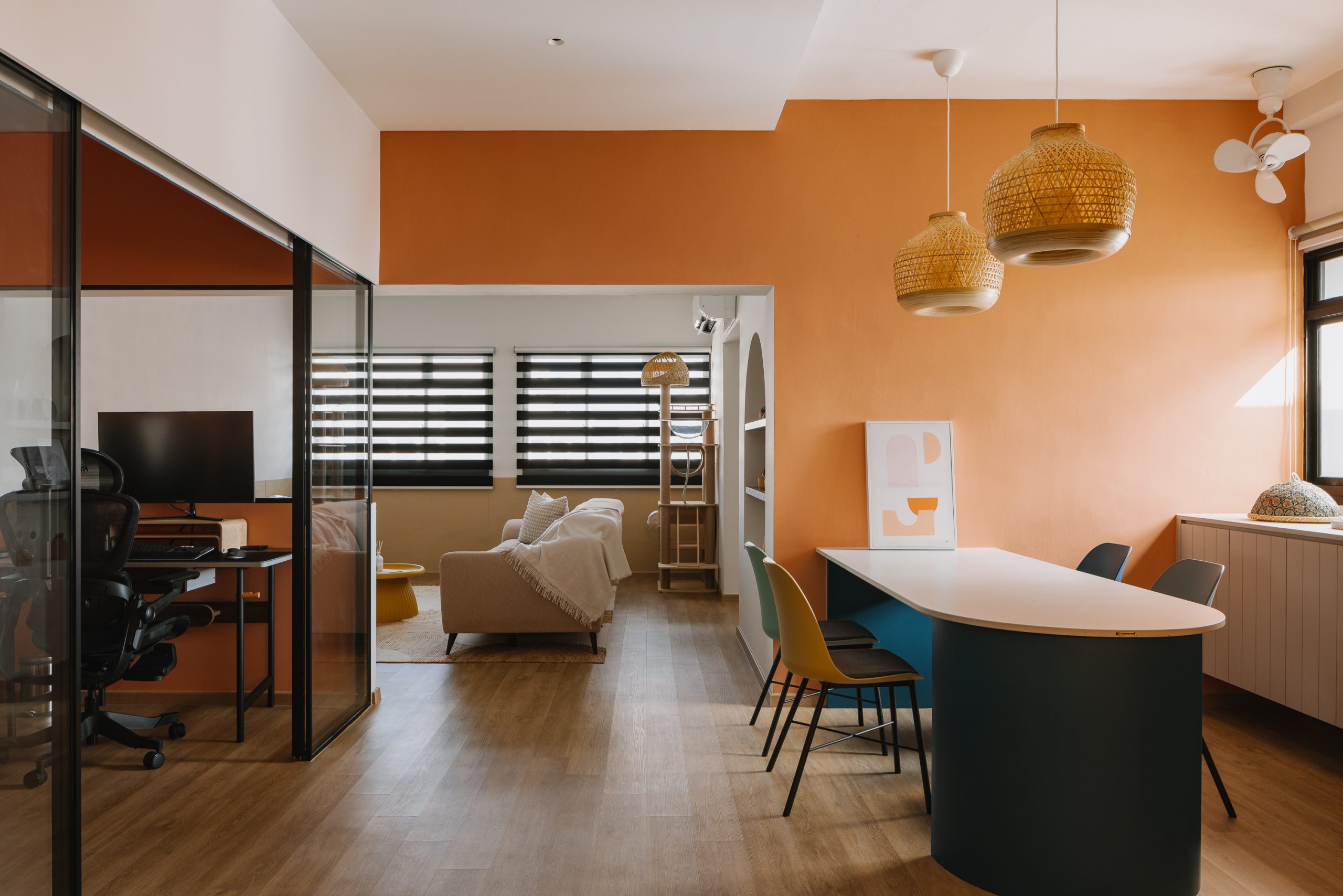
Scandinavian interior design has long been associated with pale wood, neutral tones, and a minimalist look. While this approach delivers clean lines, airy interiors, and a calm, understated elegance, it can sometimes feel a little too monochromatic.
Adding colour to a Scandinavian interior design doesn’t mean giving up what you love about the style. With a few thoughtful choices, you can bring in personality, vibrancy, and warmth while still keeping that modern Scandi look.
Scandinavian interior design style originated in the Nordic countries, where homes are shaped by climate, lifestyle, and a love for simplicity. It draws inspiration from nature, incorporating wooden accents and biophilic elements, bringing the warmth of the outdoors in.
Large windows allow natural light to fill the space, while natural wood tones dominate the furniture. Neutral palettes, such as off-white or white walls, create a calm backdrop for the rustic characteristics of the Scandinavian style.
Plush textiles, woven baskets, and greenery are also characteristic of Scandinavian style, bringing more of the outside world’s natural elements into our indoor everyday life. Scandinavian design’s goal is to create a bright, airy interior that prioritises well-being, functionality, and aesthetic harmony.
Because of this design direction, some people may find Scandinavian interior design to be too wooden or bland. However, we’ve curated a few tips on how you can make your interior pop, achieving the perfect balance between natural and modern, for your nature-inspired house.

Introducing natural materials like wood, stone, and greenery immediately adds colour and texture to a Scandinavian home. The above project takes it a step further by using glass partitions to make a space feel more airy and open.
You can also consider:
Biophilic elements are a hallmark of Scandinavian nature-rooted design, balancing and harmonising colours and textures. If you want a more vibrant but still grounded Scandi home, greenery and natural textures are a safe place to start.

Lighting shapes the mood of any interior. While Scandinavian-inspired homes often lean towards warm light for a cosy feel, having both warm and neutral lighting gives you more control over the mood of the room.
Colours will appear different under different light temperatures. A shade of green will have a different hue under warm light, neutral light, and daylight. So having both warm and neutral lights helps bring out different tones in your existing colour scheme.

Different layers of lighting serve distinct purposes in interiors.
Notice how the image above features neutral white ambient light and a window in the dining room letting in natural light. To contrast the neutral illumination, the room also features a light fixture providing warm accent light above the dining area and another warm accent light that contours the cabinet. Having these choices allows for different lighting configurations, allowing homeowners to customise their lighting setups.
By using accent lighting on wall-hung paintings, for example, homeowners can dim their ambient light without losing the colour that the paintings introduce to the room. It gives occupants tremendous flexibility in curating the colours and atmosphere of their space.
Note that installing lighting will require electrical and interior design coordination. Get in touch with The Interior Lab and let’s discuss how you want your lighting to be configured.
Scandi interior design doesn’t have to be all brown, pale wood, and neutral hues. Introducing colour strategically creates visual interest and elevates the furniture and décor without compromising the clean, functional style.
A sofa, cushions, artwork, or a rug in the right colour can instantly lift a neutral Scandinavian interior. Here are some easy ways to build a palette:

Cool, nature-inspired greens like sage and forest green pair beautifully with warm wood tones. The greens act as a calm, cool counterpoint to the kitchen’s warmer timber and caramel hues, creating a grounded, forest-like palette.
Notice how in the image above, the forest cabinets complement the wooden chairs, countertop, flooring, and feature lights to set a forest scheme for the kitchen.
These colours are perfect for:

Earth tones such as beige, tan, camel, rust, terracotta, mustard, and olive green bring out the wooden accents of the Scandinavian look.
They are ideal for:
These colours add depth to the brown tones, making the space feel more layered and inviting.
A triadic colour scheme consists of colours evenly spaced from each other on the colour wheel—creating a varied contrast that feels complete.
In Scandinavian interiors that lean warm (think brown wood and creamy neutrals), you can create a triadic-like pop by pairing that warmth with muted greens and purples—greens via indoor plants, and purples through soft furnishings, cabinetry accents, backsplashes, or décor.
Through this addition, triadic colour schemes nudge a Scandinavian’s mood from warm to serene.
Keep triadic colours:

Off-white, ivory, cream, charcoal, black, and warm grey (often called greige) create a strong, flexible base. This neutral harmony pairs well with practically every primary colour (i.e., the orange hue of wood), ensuring a luxurious yet personal space.
Use them to:
Do use these neutrals thoughtfully, as they can lean towards a more luxurious look, which is different from classic Scandinavian interiors.
There is a lot to consider when it comes to brightening a Scandinavian home, from colour theory and lighting to space planning. If you want a timeless Scandinavian interior that still has personality, it helps to work with a professional.
A professional interior design company in Singapore can guide you through every step of your renovation process, from concept and material selection to furniture placement and lighting.
Here at The Interior Lab, we’re no strangers to combining design styles to achieve a harmonious blend of contemporary and classic. We’ve worked on plenty of Scandinavian interiors, each with its own twist and tailored personality.
With our help, you can invigorate your Scandinavian home with colour, creating a bright and inviting space for you and your guests. Contact us today!
Neutral tones like off-white, cream, pale wood, and grey form the base. Complementary colours such as navy or teal, analogous earth tones like rust and terracotta, and muted triadic colours like soft greens or purples can be introduced sparingly for visual interest.
Yes. Use colour in small doses: through cushions, rugs, artwork, or small furniture pieces. The key is balance: one bold colour should complement the neutral base rather than dominate it.
Biophilic elements bring natural materials and greenery indoors. They add texture, visual interest, and warmth while promoting well-being. Examples include houseplants, wooden furniture, woven baskets, and stone accents.
Layered lighting works best: ambient light for overall illumination, accent light to highlight features, and task light to provide vision for tasks and chores. Combining warm and neutral light helps highlight the wooden accents’ browns without drowning the scheme in warmth.
While it’s possible to do it yourself, a professional can help maintain balance between colour and minimalism, select materials and textures, and coordinate lighting, furniture, and décor to achieve a cohesive and inviting space.
 BACK TO BLOG