



Designing a home is more than choosing colours and furniture. It’s about planning a space that supports how you live each day—your routines, habits, and the way you move through the home. With the right details and layout, your home can feel comfortable, functional, and true to your style.
Every homeowner has a different lifestyle, and your home should adapt to yours. Whether it’s an HDB flat, a condominium or a landed house, the right interior design can make daily life smoother and more personal.
In this guide, we’ll share practical tips on how to design a home that fits your lifestyle—and how working with an experienced interior design company in Singapore can make the process seamless.
No two homes are the same—even if they start with a similar layout. In Singapore, many HDB flats and condominiums follow standard floor plans, but the way each household lives is different.
Your household size, daily routines, storage needs, and hobbies all affect how the space should be planned. Design preferences also matter, from the overall style to practical details such as the amount of counter space you need or where you prefer to place your work area. These factors shape how the home functions day-to-day.
That’s why a renovation should be planned intentionally—with your lifestyle and daily needs guiding the layout, storage, and finishing choices.
The design phase is where the renovation direction is set. It turns your needs into a clear plan—covering the layout, key features, and the materials and finishes to be used.
The design process at a professional interior design firm typically involves:
With proper design planning and site coordination, the renovation stays aligned—from concept to completion.
Home design is not just about choosing a look. It’s also about planning for how the space will support your daily routine, comfort, and storage needs. Here are a few factors to consider:

Household size affects how your home should be planned—from circulation space to storage and privacy. A well-planned layout helps everyone move comfortably through shared areas and keeps daily routines running smoothly.
For example, if your family is expecting a new child, you may need to plan your sleeping arrangements by establishing a designated nursery zone or repurposing a spare room as a nursery or helper’s quarters.
Your daily routine should guide how each area is designed. Do you work from home, host clients, or spend evenings entertaining friends? These habits affect what you need from your layout, lighting, and storage.
For example, if you spend long hours at a desk, you may benefit from a dedicated work area with better acoustic control and fewer distractions. If you run a home-based food business, improving the kitchen workflow—such as counter space, storage, and appliance placement—can make a noticeable difference.
A good interior designer will map out these routines early so the home supports how you actually live.

Beyond daily commitments, your home should also make room for hobbies and interests that bring you joy. Whether it’s collectables, reading, gaming, or fitness, these activities should feel comfortable to enjoy at home.
For example, a custom display shelf with integrated lighting can showcase collectables neatly without cluttering the living area. If you enjoy activities like yoga, painting, or music, planning for adequate open space, lighting, and storage helps you enjoy your hobby comfortably—without disrupting other parts of the home.
With thoughtful planning, your interests can be integrated naturally into the design.

If you host often, you may want to prioritise a more open living and dining area, flexible seating, and practical storage to keep the space tidy. Some homeowners also prefer a guest-friendly layout, such as a study that can double as a guest room when needed.
That said, not every home needs significant changes purely for entertaining. A good designer will ask how often you host and suggest practical solutions to ensure the design fits your lifestyle without adding unnecessary cost.

Your home should reflect your personal style—because it’s where you spend most of your time. For example, someone who prefers an eclectic look may not feel comfortable in a very minimal space, and vice versa.
An interior designer helps translate your preferences into a cohesive design concept, balancing aesthetics with practical needs so the home feels both functional and uniquely yours.
When a layout doesn’t match how you live, you feel it every day—whether it’s cooking in a tight kitchen, moving around cluttered walkways, or not having storage where you need it. A lifestyle-centred home reduces daily friction by improving functionality and flow.
As such, a lifestyle-centred home can lead to:
Intentional, lifestyle-centred interior design helps build a space you’ll love for years to come.
Designing the best possible home for one’s unique needs involves the following process:
Start by identifying what you want from your home.
Consider your lifestyle, family needs, and personal vision. Make a list of must-haves, from a partitioned computer room, baby-proofing additions, a new kitchen layout (e.g., horseshoe, island), to aesthetic touches. Your interior design firm can use these goals and desires to guide the design process and ensure the home supports your life.
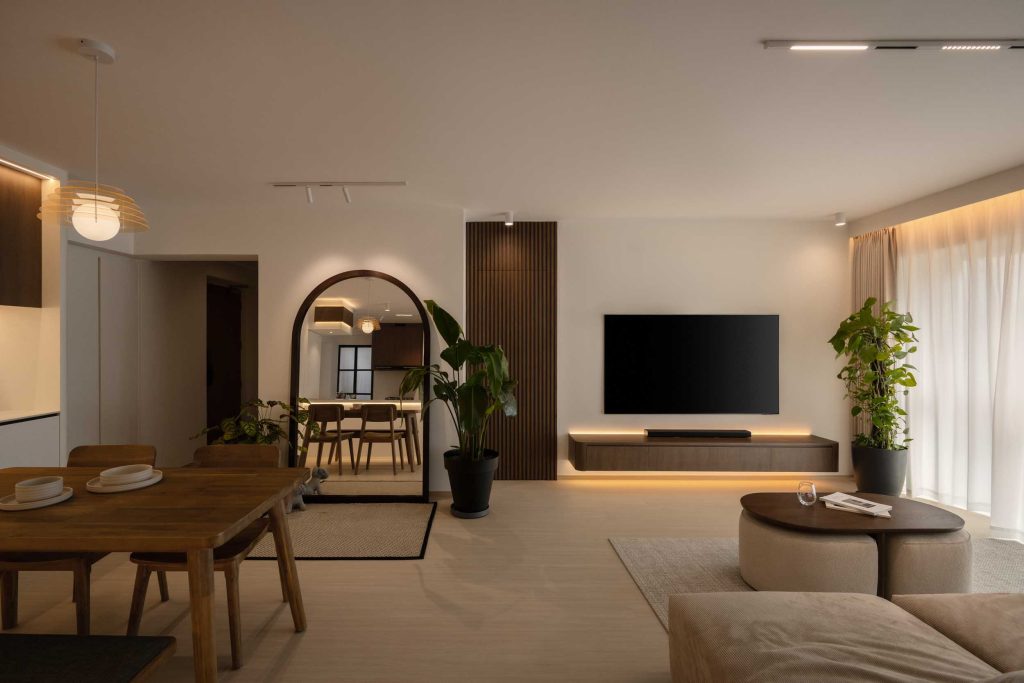
Notice how there are spotlights pointing towards the mirror in the room above. This suggests that the mirror isn’t an afterthought—it’s part of the planned interior design.
It also helps to note what didn’t work in your previous home—such as poor privacy, inconvenient socket locations, or insufficient storage—so your next renovation addresses those pain points.

A floor plan helps your designer understand the existing layout, enabling proper planning for the renovation. It also helps identify what can be changed and what needs to remain—especially for structural elements and service areas.
For HDB flats, works such as wall hacking and specific wet-area works must comply with HDB renovation guidelines. Your designer will review feasibility and advise on the required approvals before any work begins.
Collect images and mood boards that reflect your style. This helps your designer understand the look and feel you’re aiming for, such as the colour palette, materials, and overall mood.
Design references also help when discussing carpentry, finishes, and fittings—so the design direction stays consistent and the quotation is clearer. During the consultation, your interior designer can help translate your references into a cohesive plan that fits your space and lifestyle.
Here’s what a design firm consultation can help you with:
The initial consultation helps homeowners compare options and align scope and budget. It will also better prepare homeowners with a proposed design direction and space plan, minimising revisions and cost overruns.

Once your floor plan and design references are reviewed, the designer will develop the proposed design direction and space plan. Most firms charge design fees—so it’s good to clarify what’s included at this stage.
Common deliverables may include:
Finalising the design helps you confirm the layout and overall look before renovation works begin. This is also where key selections—such as carpentry, finishes, and fittings—are finalised to minimise later changes.
Some firms may request sign-off on the design before proceeding to the next stage.
After you confirm the design and proceed with the project, the details become more technical. This is where the plan is translated into buildable drawings and a clear work schedule.
At this stage, you may expect:
With these items in place, the project can proceed with renovation work more smoothly.
Here at The Interior Lab, we’ve worked with a vast range of interior design styles and property types. We’ve designed and built homes for a range of households, from individuals living alone to couples starting married life to larger families.
We’re proficient in translating home dynamics and design concepts into a livable space that will serve homeowners for decades to come. Our understanding of design principles doesn’t just involve what’s trending, it also includes optimal materials and renovation work that creates a lasting home.
Get in touch with us at The Interior Lab today and start creating the functional, stylish, and personalised home you’ve always dreamed of.
Yes, experienced interior designers help homeowners rank needs versus wants. They can recommend where to invest more and where to simplify without compromising aesthetics.
Absolutely. Interior designers can focus on specific areas like kitchens, living rooms, or home offices while ensuring the updated space still flows well with the rest of the home.
Homeowners’ role in the design stage includes approving layouts, materials, and design direction. Clear communication during this stage leads to smoother renovation process later.
Homeowners should prepare basic floor plans, a rough budget range, lifestyle needs, and examples of styles they like or dislike. This helps designers give more accurate and practical advice from the start.
Most interior design firms manage coordination with renovation contractors as part of their service. This ensures that the design intent is executed correctly, minimising friction throughout the project.
Designers guide homeowners through realistic planning and visual previews. Homeowners also sign on a design once it’s finalised. This reduces impulse choices and ensures the final home aligns with that vision.
 BACK TO BLOG