



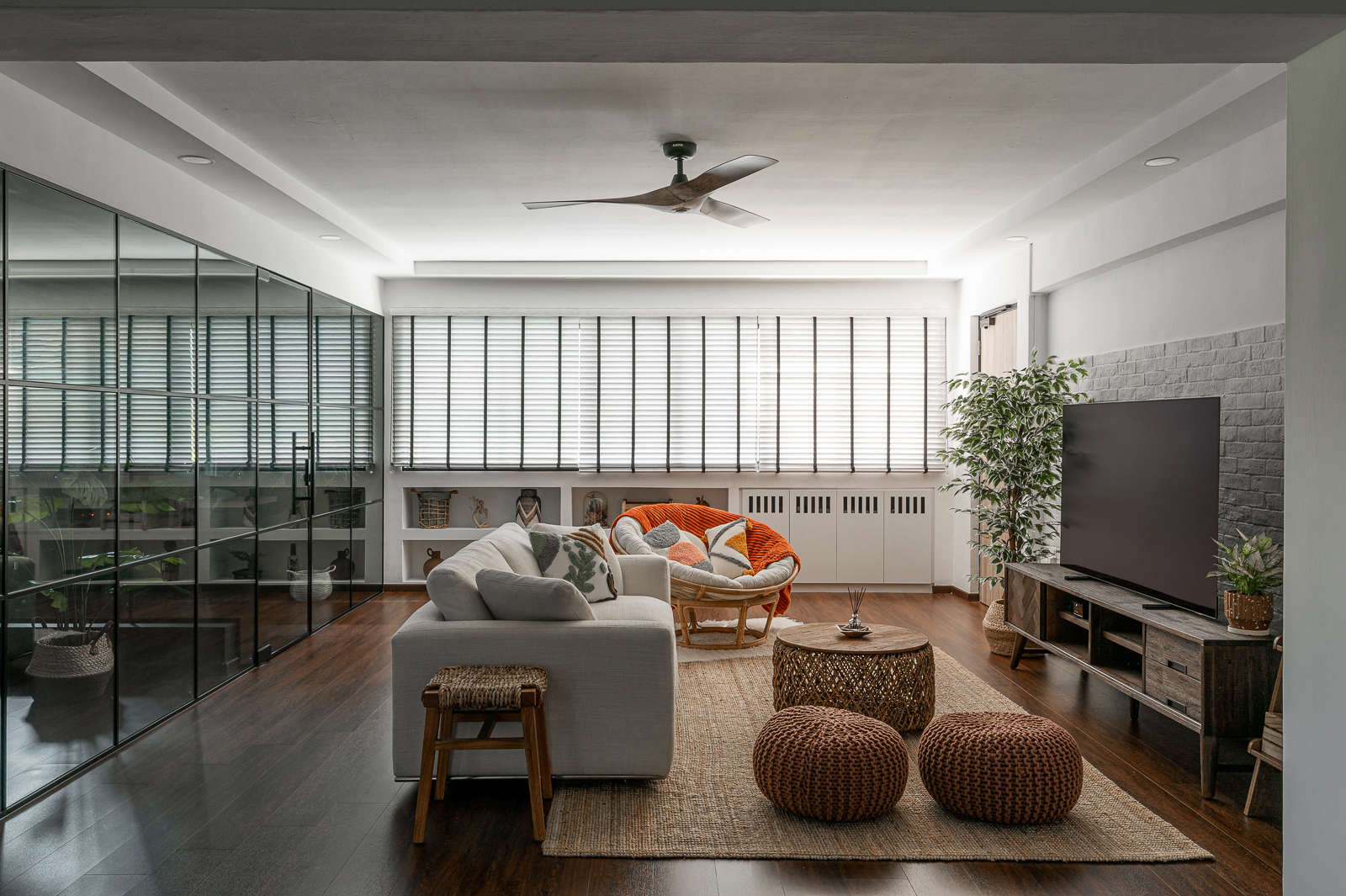
Open-concept layouts are increasingly common in many Singapore homes. By removing walls and opening up spaces, homes feel brighter, larger, and more fluid — a welcome change in compact HDB flats and condominiums.
However, openness often comes with a trade-off: privacy. Whether it’s separating work from rest, hosting guests without exposing private areas, or simply carving out quiet corners in the home, many homeowners find themselves asking the same question — how do you maintain privacy without closing everything off again?
The answer to this lies in thoughtful, layered interior design.
Instead of building full-height, solid walls, consider partial or visually light partitions. These help to define zones while preserving airflow and light flow.
Some popular partition options for Singapore homes include:
These partition solutions maintain openness while offering just enough visual privacy to distinguish one area from another.
Sliding doors and pocket doors are ideal for homeowners who want flexibility. When open, they maintain the open-plan feel. When closed, spaces in the home are distinctively segregated to achieve privacy.
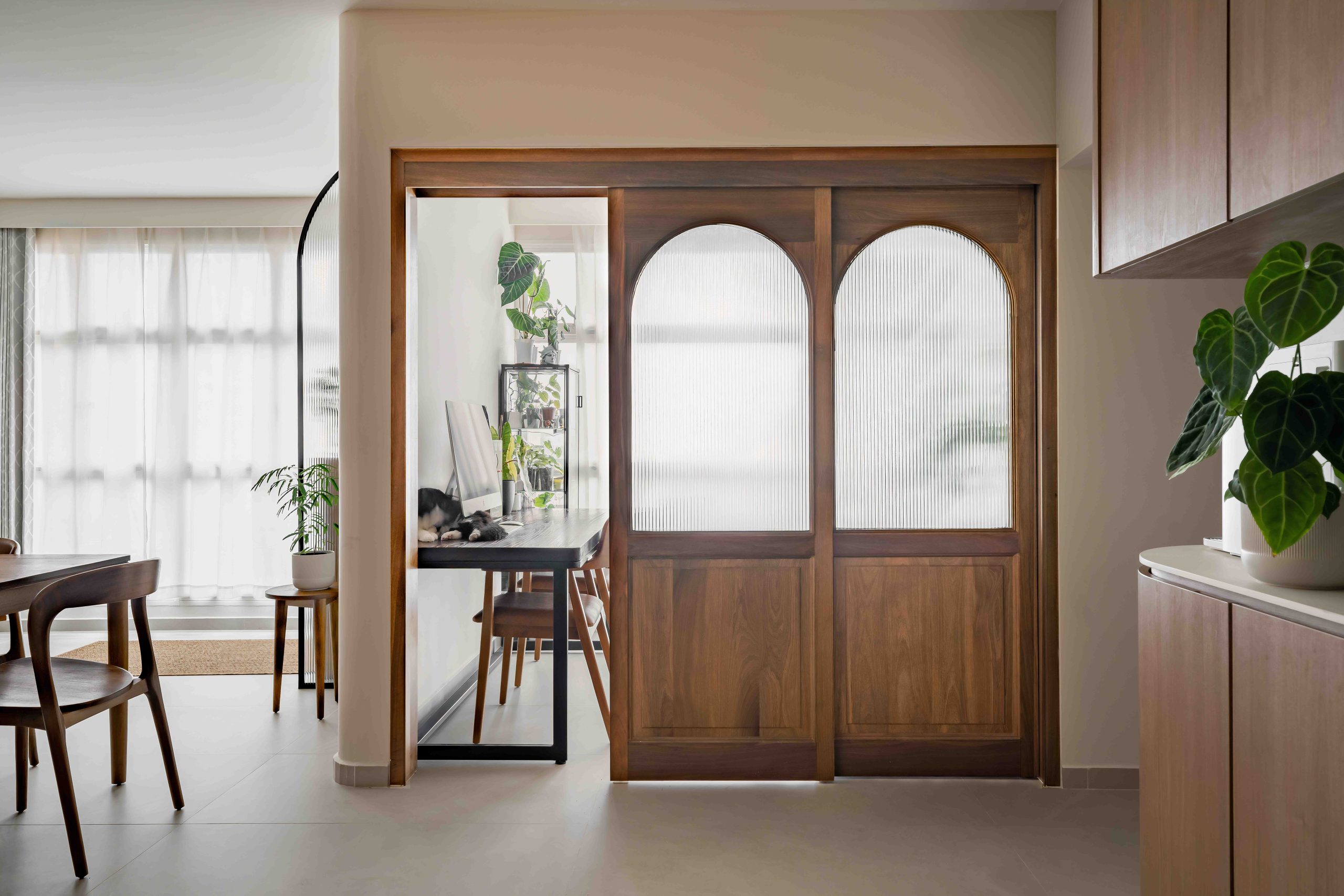
Glass sliding doors are often used to segregate the kitchen and communal area, while solid or panelled doors are better suited for study rooms or guest areas. Pocket doors, which slide neatly into the wall, are especially effective in compact apartment layouts where space is limited.
Curtains, blinds, and soft furnishings should not be overlooked in open-concept homes. Floor-to-ceiling curtains can be used to temporarily divide spaces, offering flexibility without permanence.

Soft materials also help absorb sound — an important consideration in open layouts where noise travels easily. Upholstered furniture, rugs, and fabric panels contribute to a calmer, more private-feeling environment.
Privacy doesn’t necessarily mean separation. Sometimes, it’s about thoughtfully designing a more personal corner within a shared space.
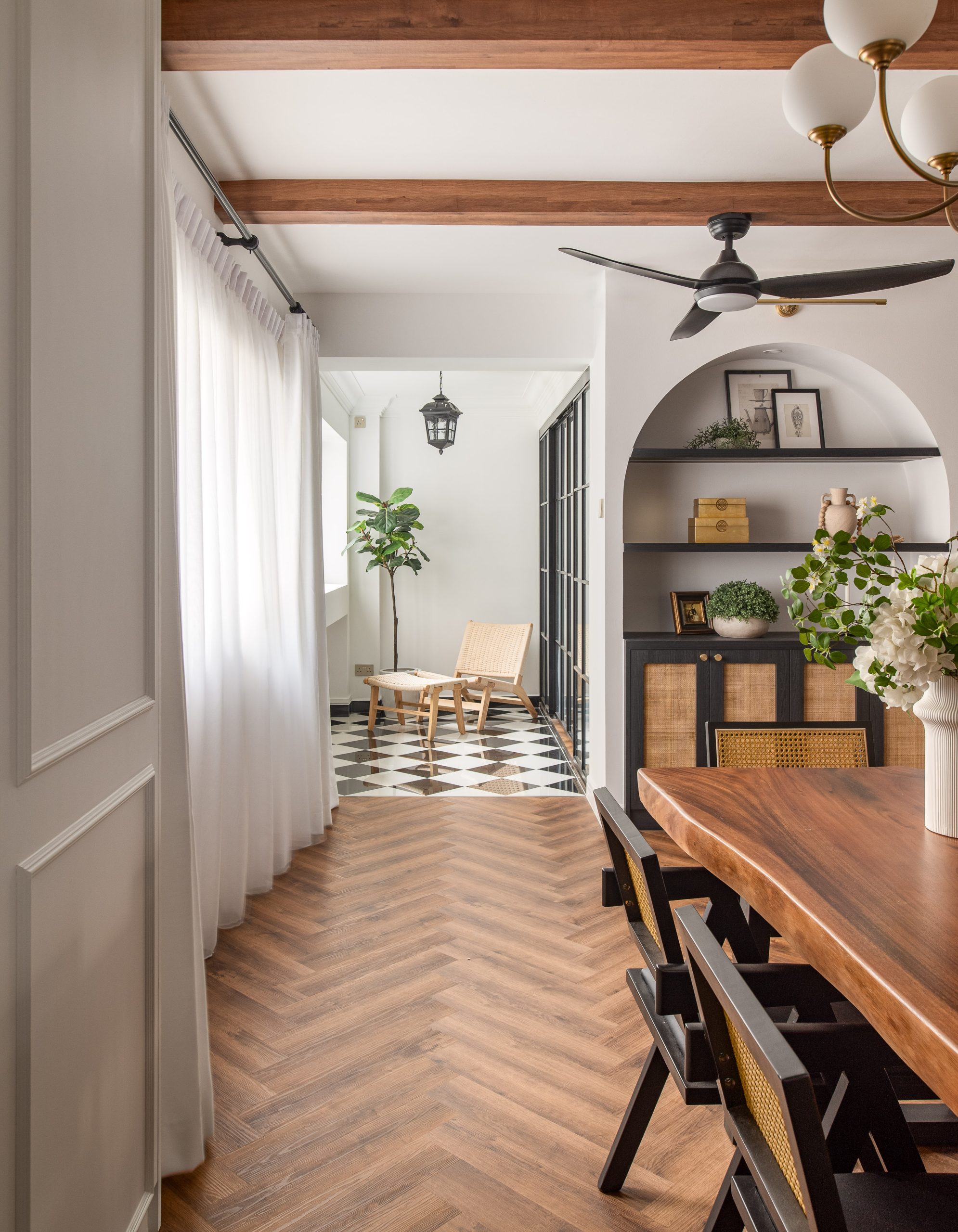
It could be a reading nook tucked into a corner by the communal area, or a compact home office framed by shelving or a partial screen. Such zoning can offer personal space without fully isolating the area and make open-concept homes more liveable in the long run.
Creating privacy in an open-concept home is about balance. The goal isn’t to divide for the sake of it, but to design spaces that support different activities without compromise. With thoughtful design and planning, you can enjoy a practical open-concept home that will feel open, comfortable, and well-considered for everyday living.
 BACK TO BLOG