



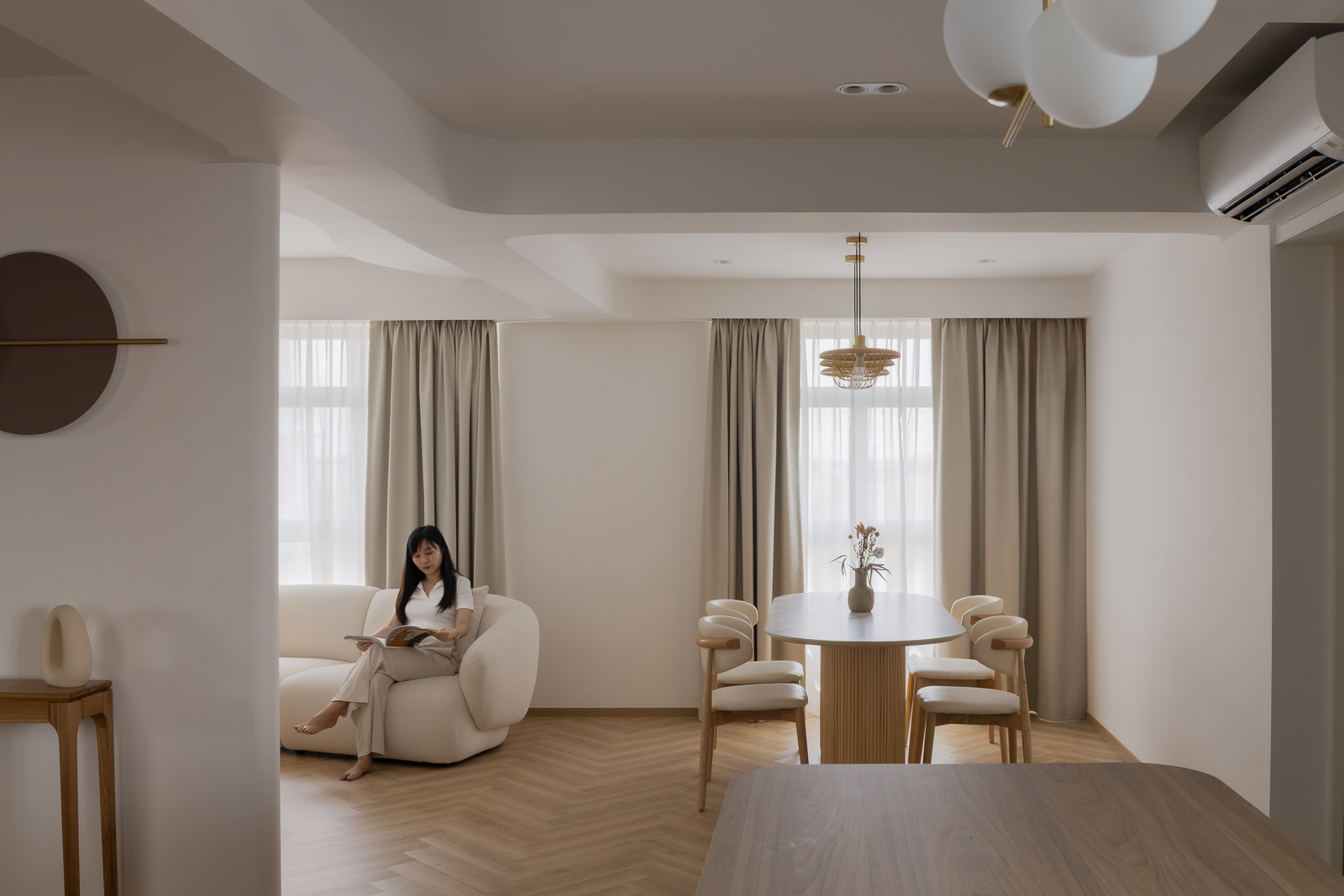
A well-designed home should evolve with you — not against you. In Singapore, renovation is a major investment and homeowners are increasingly looking for ways to future-proof their home interiors.
Future-proofing isn’t just about incorporating smart home systems. It’s about designing with foresight — creating a home that remains functional, comfortable, and beautiful as your lifestyle changes over the years.
Here are 5 ways that thoughtful design can help you build a home that stands the test of time.
The way we use our homes may change drastically over time. A space that once served as a home office may need to be converted into a children’s playroom or a bedroom for elderly parents in a few years. The pandemic has also taught us that sudden changes to our homes may be needed, where if unprepared, may see us scrambling to set up makeshift home offices in the dining area, bedroom, or even the living room.
By keeping layouts adaptable, you allow your home to grow with your needs. You can consider:
Design flexibility ensures that your home remains relevant, no matter what life stage you’re in.
Trends come and go, but timeless design never loses appeal. Future-proof interiors tend to favour neutral palettes, natural materials, and clean architectural lines that adapt easily to changing tastes.
In Singapore’s humid climate, it also pays to invest in quality finishes and low-maintenance materials that age gracefully. In the case of flooring, for high-traffic areas like bathrooms and the kitchen, porcelain or homogenous tiles are ideal as they are non-porous, moisture-resistant, and easy to clean. For other areas like the living room and bedroom, engineered wood can be considered as it offers the beauty of solid wood, but with better durability in Singapore’s humidity.
Clutter tends to accumulate, the longer you live in a home. Future-proof design considers not just current storage needs, but future ones too. Some ways to go about this are as follows:
Good storage design helps maintain a clean, uncluttered look — no matter how your lifestyle evolves over time.
Future-proofing also means being mindful of sustainability and long-term efficiency. These can come in the form of energy-efficient lighting and appliances, or smart home wiring and concealed power points for future tech integration.
Eco-conscious materials such as low-formaldehyde carpentry are also important to ensure a healthier indoor environment.
These decisions may not have immediately visible impacts, but they add value and comfort over time.
A truly future-ready home is one that supports comfort and usability at every age. Whether for the young or for the elderly, subtle design considerations today can make a big difference later on.
Some points of consideration are:
These details not only make your home safer but also enhance day-to-day liveability, now and in the future.
Future-proofing your home is about designing with intention and adaptability. Whether it’s building flexibility into your layout, or selecting durable finishes, a well-thought-out home will always feel current and meaningful.
 BACK TO BLOG