



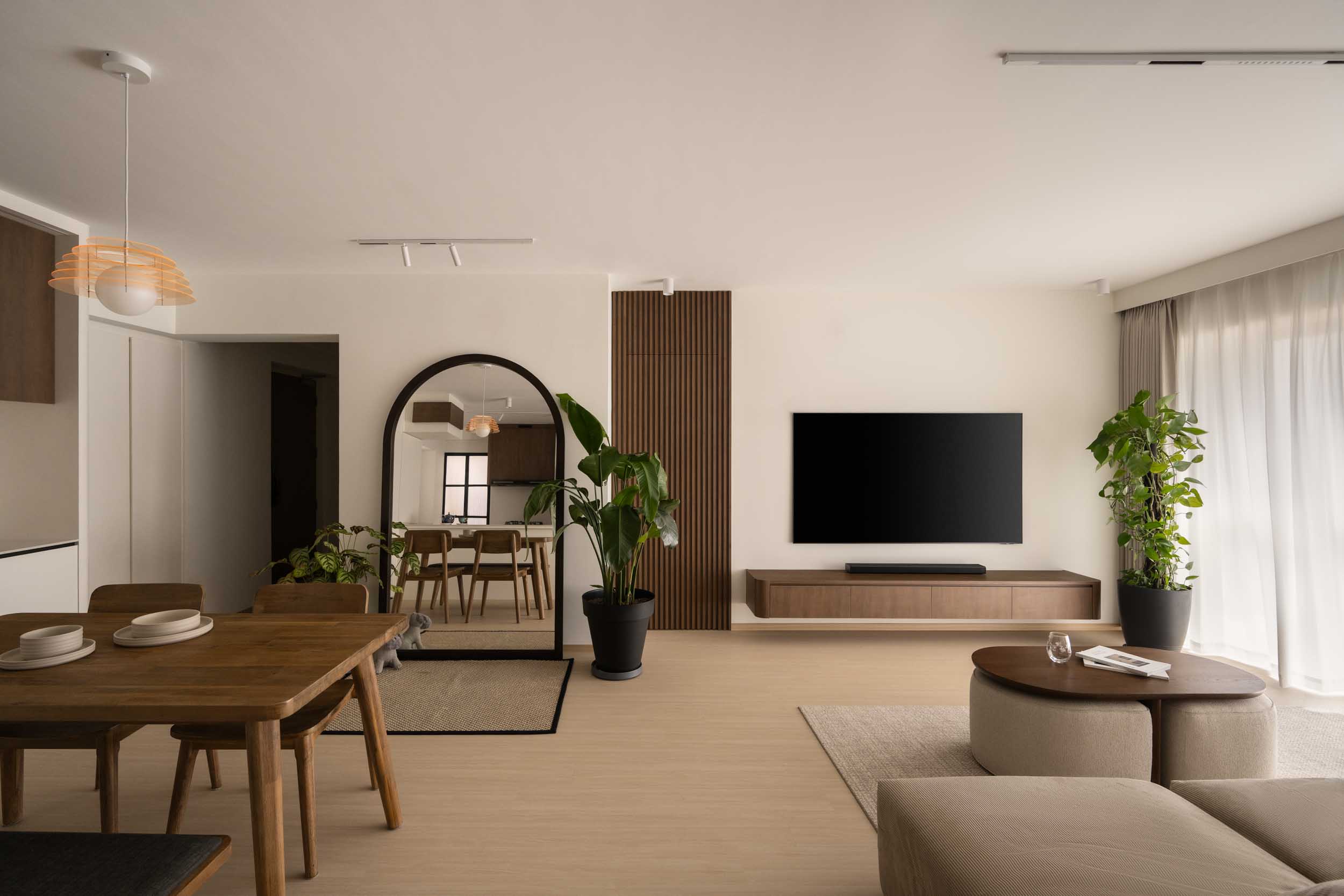
Designing an HDB home in Singapore requires a careful balance of practicality, regulation, and personal style. Limited space, fixed layouts, and renovation guidelines can feel restrictive, but they also encourage creativity. At The Interior Lab, we often find that the most successful projects are not about making homes bigger, but about making them feel more open, brighter, and quietly luxurious. This is where thoughtful spatial planning plays a key role.
In this article, we explore how homeowners can apply open, light, and luxe principles to HDB interior design in Singapore, using creative spatial strategies that enhance flow, comfort, and everyday living without unnecessary excess.
HDB flats are designed for efficiency and accessibility, which means layouts are often standardised and space is carefully allocated. Living areas may feel compact, kitchens are often enclosed, and bedrooms are sized to meet minimum requirements rather than lifestyle preferences.
These constraints make spatial design especially important. Poor planning can result in dark corners, awkward circulation paths, or rooms that feel disconnected. On the other hand, thoughtful spatial decisions can dramatically improve how an HDB home looks and functions.
Good HDB interior design in Singapore starts with understanding how space is perceived, not just how it is measured.

Open-plan living is a popular aspiration, but openness does not mean tearing down every wall. In HDB flats, structural walls, service shafts, and regulations limit what can be altered. The key is to create openness visually and functionally.
One of the simplest ways to create a sense of openness is through visual continuity. Using consistent flooring across living, dining, and sometimes kitchen areas helps the eye move smoothly through the space. This reduces visual breaks and makes the flat feel larger.
Colour consistency also plays a role. A unified palette across major spaces creates harmony and reduces visual clutter, especially in smaller flats.
Where full walls are not required, consider creative partition ideas that maintain separation without blocking light. Alternatives such as glass panels, fluted glass, or open shelving act as smart dividers that allow visual continuity while still defining space. These solutions are particularly useful between kitchens and living areas or between study corners and communal spaces. They preserve privacy and function while allowing light and sightlines to flow freely.
Lighting makes a big difference in HDB homes, especially when natural light is limited.
Window treatments should enhance rather than obstruct daylight. Sheer curtains, light-filtering blinds, or layered window solutions allow flexibility while maintaining brightness during the day.
Mirrors and reflective surfaces can also be strategically placed to bounce light deeper into the home, brightening areas that might otherwise feel dim.
Artificial lighting should never rely on a single ceiling fixture. A layered lighting approach creates depth and allows spaces to adapt to different activities and moods.
Ambient lighting ensures overall brightness, task lighting supports specific functions, and accent lighting adds warmth and interest. In HDB interior design in Singapore, this approach helps small spaces feel intentional and well-considered rather than flat.

A luxe HDB home isn’t about being flashy. It’s about quality finishes and a calm, cohesive look.
Luxe interiors often rely on a restrained palette of materials used consistently throughout the home. Laminates with subtle textures, stone-inspired surfaces, and warm wood tones create a sense of sophistication without visual overload.
The focus should be on how materials feel and age over time, not just how they look on day one.
Excessive ornamentation can make compact spaces feel busy. Instead, clean lines, concealed storage, and minimal detailing contribute to a refined atmosphere.
Details such as handle-less cabinetry, shadow gaps, and integrated lighting elevate the overall design while keeping it visually calm.

Zoning is essential in HDB homes where multiple activities often share the same space.
Furniture placement, rugs, and lighting can subtly define different zones within an open area. For example, a pendant light over the dining table helps distinguish it from the living space, even without physical separation.
These strategies maintain openness while ensuring each area has a clear purpose.
Modern HDB homes often need to accommodate work, study, relaxation, and socialising. Designing flexible spaces allows rooms to evolve over time.
Sliding panels, foldable furniture, or built-in elements that serve multiple functions help maximise usability without permanent changes.
The table below outlines common spatial challenges in HDB flats and effective design responses.
|
Spatial Challenge |
Design Solution |
Benefit |
|
Compact living areas |
Open-plan layout with defined zones |
Improves flow and perceived space |
|
Limited natural light |
Light colour palettes and reflective surfaces |
Enhances brightness |
|
Storage constraints |
Full-height built-ins and concealed storage |
Reduces clutter |
|
Narrow walkways |
Streamlined furniture and clear circulation paths |
Improves comfort |
|
Multi-use rooms |
Flexible layouts and adaptable furniture |
Supports changing needs |
Renovating an HDB flat requires careful planning because all works must comply with regulations set by the Housing Development Board. These guidelines are designed to ensure structural safety, minimise disruption to neighbours, and maintain the long-term integrity of public housing. Creative design is still possible, but it must be approached with a clear understanding of what can and cannot be changed.
Knowing these requirements early in the design process helps homeowners avoid redesigns, delays, and unexpected costs. It also encourages smarter design solutions that enhance comfort and aesthetics without unnecessary hacking or disruption.
Key HDB renovation guidelines homeowners should be aware of include:
While these guidelines may seem restrictive, they often lead to more thoughtful and efficient design solutions. Instead of relying on structural changes, designers can enhance space through lighting, built-in storage, material selection, and layout optimisation.
Working with professional designers who are familiar with HDB renovation requirements helps streamline approvals and execution. They can advise on compliant design options, prepare accurate submissions, and coordinate works efficiently, allowing homeowners to achieve their desired look while remaining fully compliant.
A well-designed HDB home feels open, light, and luxurious not because of how much is added, but because of how thoughtfully space is used. Spatial design is about clarity, comfort, and creating an environment that supports daily life.
At The Interior Lab, we believe that successful HDB interior design in Singapore starts with understanding how people live, move, and relax in their homes. By applying creative spatial strategies, we help homeowners transform standard layouts into personalised spaces that feel calm, cohesive, and enduring.
If you are considering reimagining your HDB home, our team is always ready to explore design approaches that balance creativity with practicality and long-term value.
Yes. Visual continuity, smart zoning, and light-friendly partitions can create openness without removing walls.
Light neutrals, soft warm tones, and consistent palettes help reflect light and reduce visual clutter.
When designed thoughtfully, luxe interiors focus on durability, storage, and comfort, making them suitable for daily use.
Lighting is critical. A well-planned lighting scheme improves functionality, ambience, and perceived space.
Yes. Spatial planning should come first, as it influences layout, circulation, and how finishes are experienced within the space.
 BACK TO BLOG