



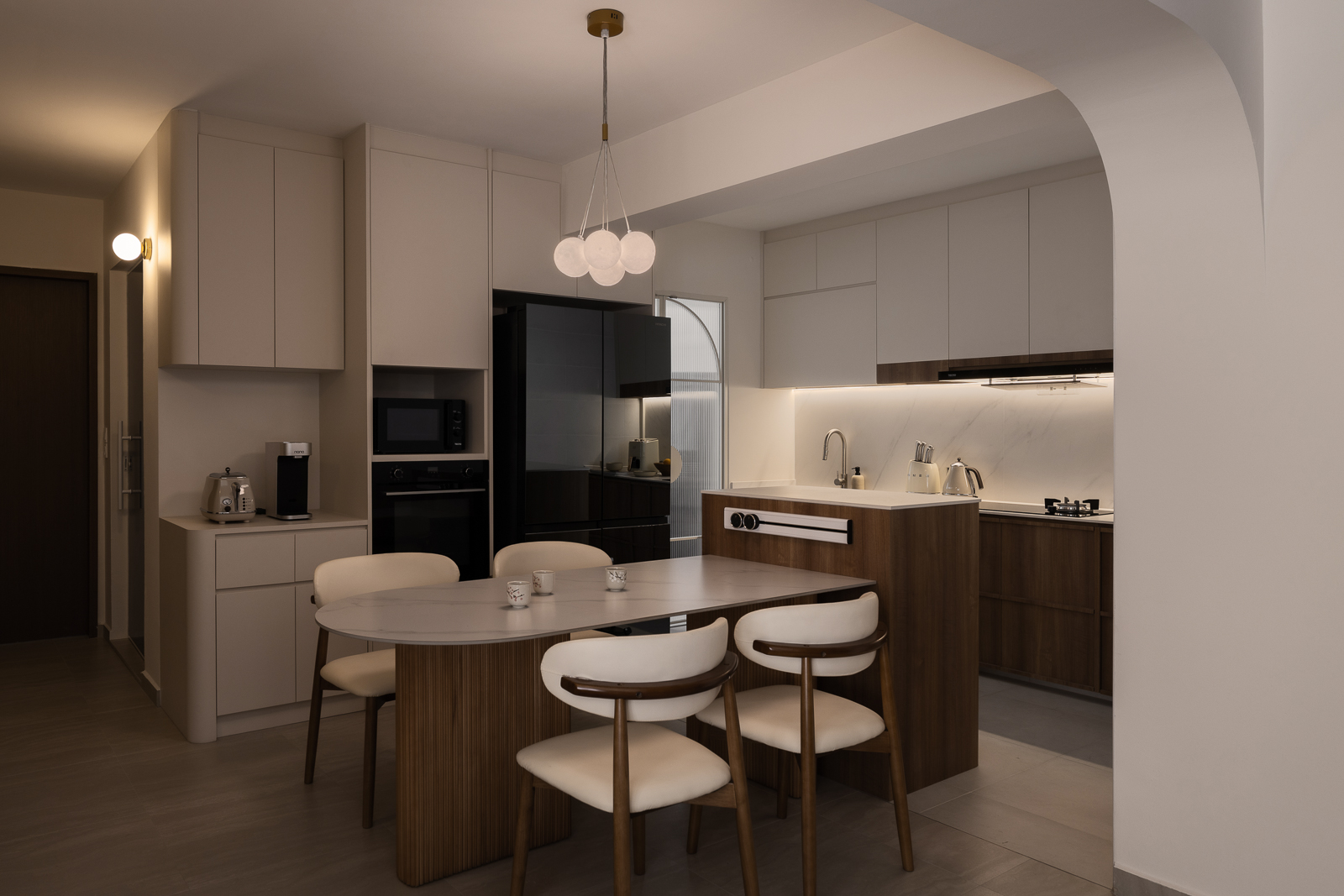
Kitchens—especially in HDB flats and compact apartments—often have limited space and natural light.
A small, dark kitchen can feel cramped and harder to work in. With the right lighting plan, however, even a compact kitchen can feel brighter, more spacious, and more comfortable for daily cooking.
Lighting is not just about visibility. It also affects mood, how the finishes look, and how functional the kitchen feels throughout the day. For homeowners embarking on kitchen interior design in Singapore, we’ll show you how to layer and place lighting so your kitchen works better—and looks better too.
Lighting does more than help you see. It can change how a space feels and how it functions:
Whether your kitchen is compact or spacious, lighting should be a key part of the design plan—because it affects both style and day-to-day usability.
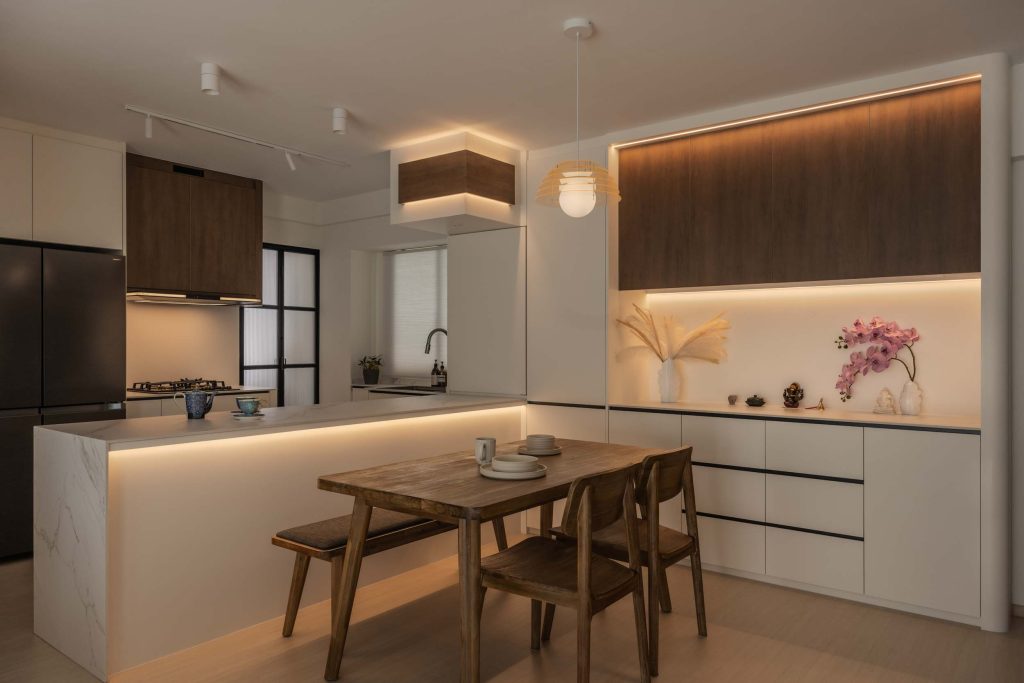
Kitchen lighting matters because the kitchen is both a workspace and a social space. Good lighting improves safety while making the kitchen feel more welcoming—especially in small layouts.
The kitchen is a work area first. From food prep to cooking, good lighting helps you see clearly and reduces the risk of accidents—especially around knives, hot surfaces, and spills.
A practical mix of ceiling lighting and task lighting (such as under-cabinet lights) helps brighten work areas and reduces shadows on the countertop. It also makes it easier to quickly find ingredients, utensils, and storage.
Lighting also affects how the kitchen feels. Warm lighting can make the space feel more relaxed during meals or when hosting, while brighter task lighting supports cooking and cleaning.
Lighting fixtures can also act as design features. For example, pendants above an island or dining area can serve as a focal point, adding visual interest.
A well-planned kitchen lighting layout typically incorporates multiple layers, ensuring the kitchen performs well in various situations—cooking, cleaning, dining, and entertaining.
Ambient lighting provides overall brightness for the kitchen. It serves as the base layer, allowing you to move around comfortably.
Common examples include ceiling lights, downlights, or track lights.
Task lighting focuses on work zones where visibility matters most—countertops, sinks, stoves, and prep areas.
Common examples include under-cabinet lighting, LED strips, and focused pendants over an island or counter.
Accent lighting highlights features and adds depth to the kitchen design. It’s optional, but it can make a kitchen feel more premium.
Examples include lighting for a statement backsplash, display shelves, or feature niches.

Decorative lighting is when the fixture itself becomes part of the design—such as a statement pendant or chandelier. These lights can add personality and reinforce the kitchen’s overall style.
Tip: Decorative lighting should still be planned alongside ambient and task lighting so the kitchen remains functional, not just stylish.
Kitchens with limited space can feel tight and cramped; however, the proper lighting can invigorate them with a more welcoming atmosphere.
Some ideal layouts include:
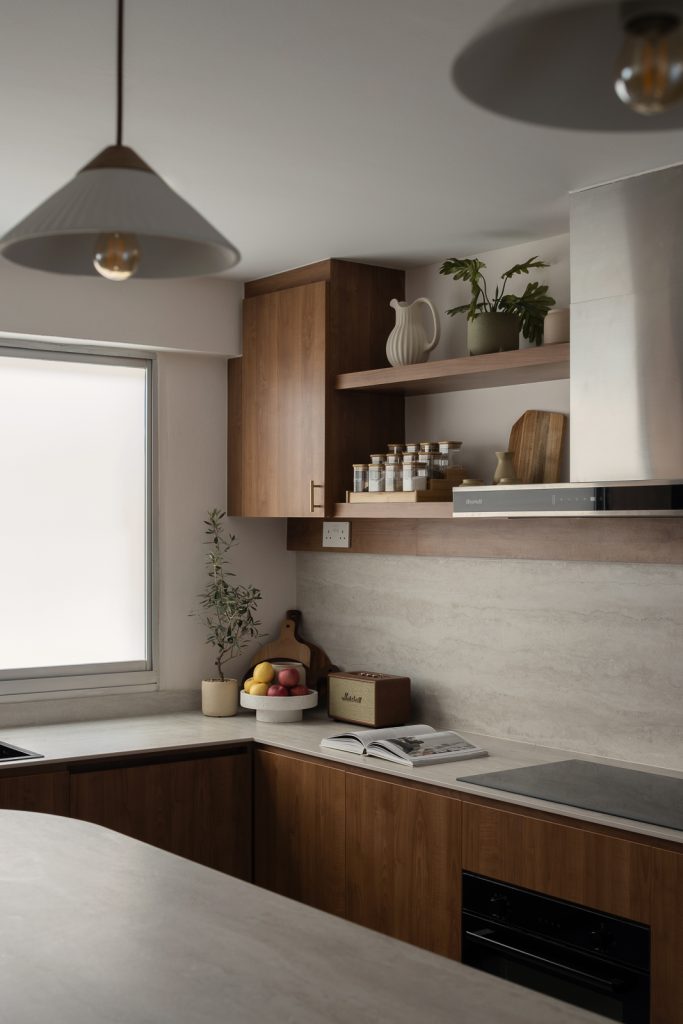
Maximise natural light where you can—especially in compact kitchens. Daylight helps the space feel more open and makes colours and finishes look more natural.
Simple ways to improve natural light:
Note: Natural light helps during the day, but you’ll still need proper artificial lighting for evening cooking and rainy days.

Under-cabinet lighting is one of the most effective upgrades for small and dark kitchens. It illuminates the countertop directly, reducing shadows from overhead cabinets—so food prep feels safer and easier.
Why it works well:
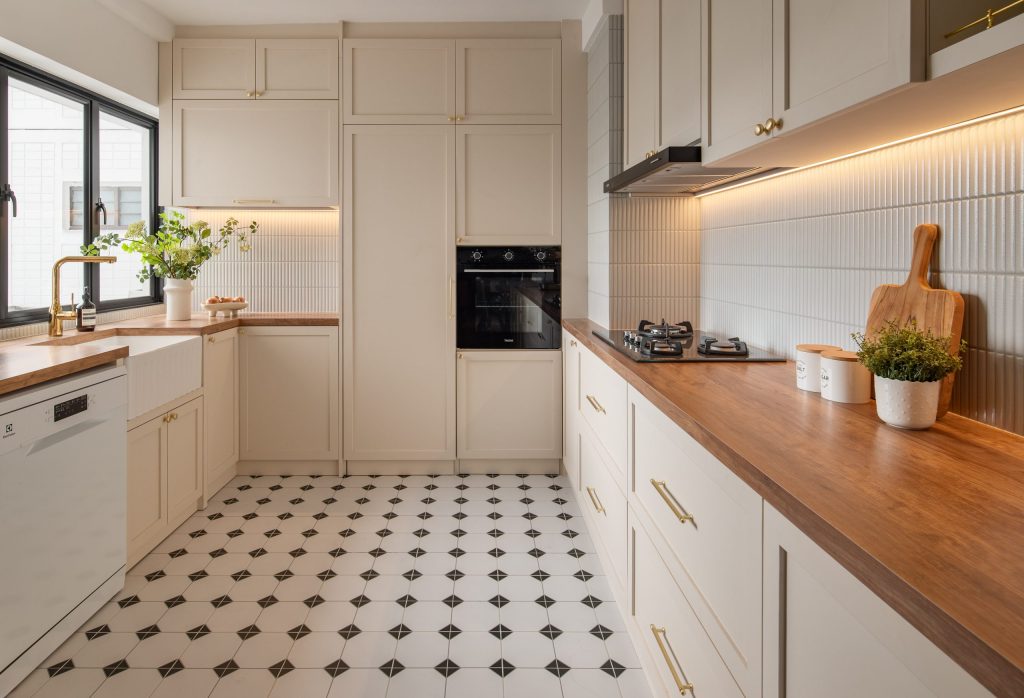
An even lighting layout aims to reduce harsh shadows and dark corners. This is especially useful in narrow kitchens, where a single ceiling light can leave the counters dim.
How to achieve it:
Even, balanced lighting helps a small kitchen feel more open and comfortable to work in.
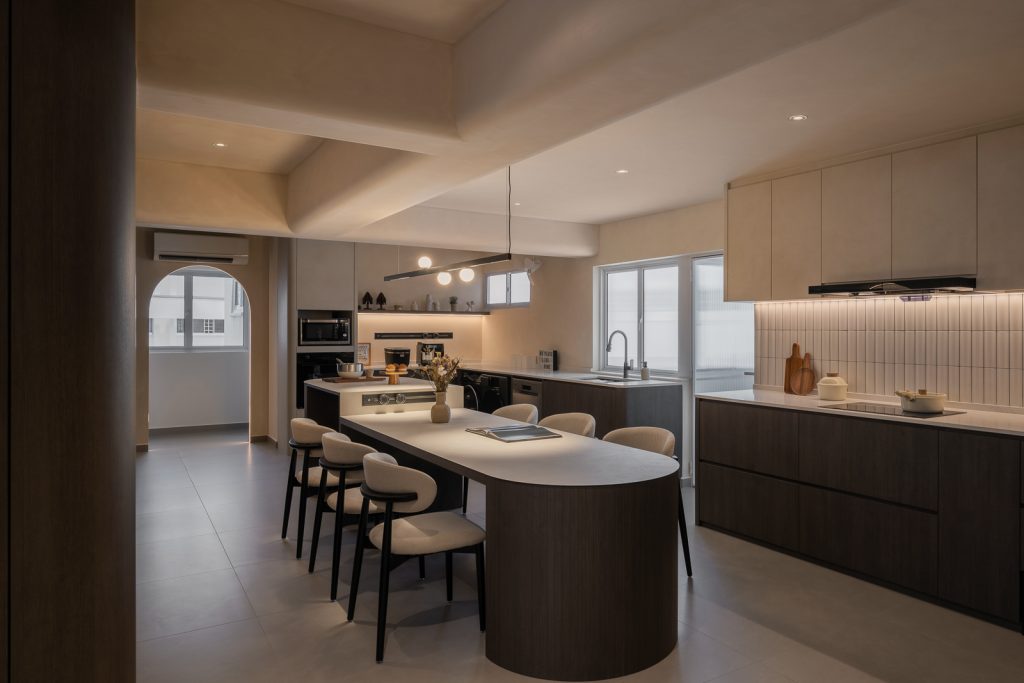
A cluster lighting layout involves grouping multiple light fixtures in close proximity to create focal points throughout the kitchen—commonly above an island, peninsula, or dining counter.
Compared to a single statement fixture, a cluster arrangement feels more layered and design-forward. It can also help define zones, especially in open-concept layouts.
Tip: Cluster lighting works best when it’s planned alongside ambient and task lighting—so the kitchen stays functional, not just visually striking.
Two-tone lighting combines neutral/cooler light for cooking with warmer light for ambience. This gives you flexibility throughout the day—brighter, clearer lighting for meal prep, and a warmer tone for dinner or hosting.
A practical way to achieve this is through layering:
This approach keeps the kitchen functional while still feeling inviting when night falls.
Even without a large kitchen, good lighting choices can make the space feel brighter and more premium.
Aim for even brightness so there aren’t dark corners. When light is distributed well, the kitchen feels more open.
To enhance the effect:
Choose fixtures that support cooking and cleaning while also fitting the kitchen style. In compact kitchens, every fixture should earn its place.
Also, plan lighting placement carefully—good positioning often matters more than choosing an expensive fixture.
Layered lighting gives flexibility and improves both function and mood. For example, you can use bright task lighting for cooking, then switch to warm ambient or accent lighting for a softer evening setting.
A simple kitchen lighting mix includes:
Because small kitchens have limited room for extra décor, lighting is one of the most effective ways to add character without taking up counter space.
Lighting can completely transform small or dark kitchens into functional, stylish, and welcoming spaces. However, to ensure the best lighting layout possible, consult with an interior designer.
Interior designers are well-versed in the various elements of interior design—harmonising shape, colour, texture, and lighting together to curate a kitchen that looks exquisite, yet is also optimal for the homeowner’s various cooking needs.
The Interior Lab, a boutique interior design company in Singapore, has experienced designers who specialise in kitchen interior design. We take into account the cooking habits and interests of homeowners, as well as their personal style, and design a kitchen concept that maximises homeowners’ limited space. We’ve created a range of kitchen styles, ranging from Japandi to modern luxury, giving us the expertise to work on the most eccentric requests.
Get in touch with The Interior Lab today to start your kitchen renovation and bring your kitchen ideas to life.
Yes, but the cabinet material and thickness can affect installation. Professional guidance ensures proper placement and wiring while avoiding damage.
Slim, minimal, or single-bulb pendants are ideal as they provide light without overwhelming the space. Adjustable-height pendants help accommodate limited ceiling and counter heights.
Illuminated areas assist in perceiving space, while shadows make it feel more cramped. Properly placed lighting and reflective surfaces that minimise shadows can make narrow kitchens feel more spacious and open.
Yes, smart lighting allows homeowners to control brightness, colour temperature, and zones for different tasks, creating a versatile and convenient kitchen environment.
Yes, decorative lighting such as pendant lights or small feature lights can double as task lighting when positioned correctly, ensuring cooking areas remain well-lit.
 BACK TO BLOG