



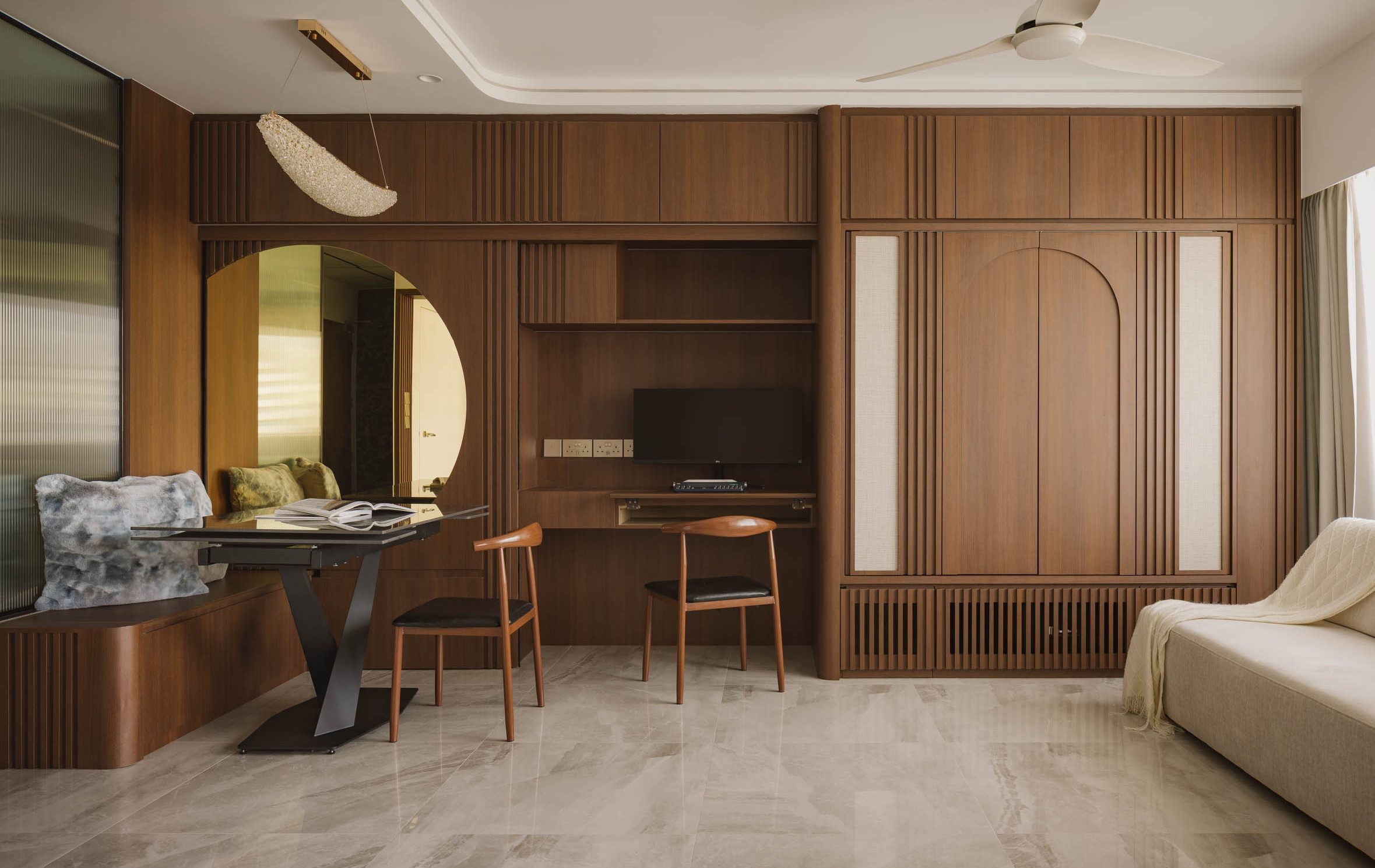
Renovating a home in Singapore is exciting—but our tropical climate can be tough on materials. High humidity, frequent rain, and strong sunlight can cause certain finishes to warp, peel, or stain sooner than expected.
This is why interior design and renovation is not just about aesthetics. It’s also about choosing materials and finishes that hold up well over time, so that your home stays comfortable and easy to maintain.
Choosing the right materials can also reduce maintenance and repair costs in the long run. Before we get into specific recommendations, it helps to understand how Singapore’s climate affects common renovation materials.
Singapore’s climate is hot and humid, and this can affect renovation materials in a few common ways:
Poor material choices can also affect indoor comfort. Some surfaces retain heat more than others, which can make the space feel warmer and increase reliance on air-conditioning.
Choosing the right interior materials is the foundation of any renovation in Singapore. With humidity, heat, and strong sunlight, some finishes wear out faster than expected. Durable, easy-to-maintain materials help your home look good for longer and reduce issues like swelling, peeling, stains, and mould.
Below are a few interior material options that tend to age well when used appropriately—whether you live in an HDB flat, a condominium, or a landed home.

Bricks are modular units made of fired clay or concrete. In Singapore homes, they’re commonly used as a feature wall finish or cladding to add texture—especially in industrial-style interiors.
Why it works well:
Tip: In HDB flats, a full brick wall may not always be practical due to renovation guidelines and site constraints, so homeowners often consider lighter ‘brick-look’ alternatives such as thin brick slips/brick veneers or brick-effect panels. Wallpaper can also achieve a similar look, but in humid conditions it may be more prone to mould or dampness if moisture gets trapped behind the covering. Your designer can advise what’s suitable for your specific wall type and whether any approvals are required.
Tropical hardwoods such as teak are dense timbers that generally perform better in humid climates than many softer woods. When properly treated and finished, hardwood can be a durable choice for interior carpentry, feature panels, and selected furniture pieces in Singapore homes.
Why it works well:
Tip: Hardwood lasts longer when it’s sealed well, kept away from constant moisture exposure, and installed with proper allowances for natural expansion and contraction.

Woven rattan adds a natural, relaxed texture that suits many Singapore interiors. Because of its open weave, it often feels more comfortable in warm weather compared to fully solid surfaces.
Why it works well:
Furthermore, depending on its source, acquiring woven rattan helps drive business for craft communities and strengthens local patronage.
Tip: Rattan lasts longer when kept dry and away from direct rain and harsh, prolonged sun. Wipe it down regularly and avoid placing it in persistently damp corners.
Finishing materials are the surfaces you see and touch every day—walls, floors, and key countertops. They affect not just the look of your home but also how well it holds up to Singapore’s humidity, heat, and daily wear and tear.
Below are a few finishes that perform well in Singapore homes, when used in the right areas and installed correctly.
UV-reflective or heat-reflective paint is designed to reflect more of the sun’s heat compared to standard paint. It is most commonly used on exterior walls, especially for landed homes or façades that receive strong afternoon sun.
While it isn’t an interior finish, reducing heat gain on external surfaces may help the home feel more comfortable in some cases—depending on factors like ventilation, shading, and window exposure.
Tip: If you’re considering this, ask your designer to advise based on the parts of your home that get the most direct sun.

Natural stone is often chosen for its premium look and durability. It also tends to feel cool to the touch because it draws heat away from your skin—making it popular for kitchen countertops and flooring in areas like bathrooms.
Why it works well:
Practical note: Some stones are porous and may need sealing. Grout lines and joints still require proper cleaning to reduce staining or mildew over time.

Limewash gives walls a soft, matte texture with natural variation. Unlike many standard paints that form a film on the surface, limewash is vapour-permeable, making it more forgiving in humid conditions.
Why it can work well:
Tip: Limewash has a distinct look and may show natural tonal variation. It’s best used where you want that soft, textured effect.

Porcelain and ceramic tiles are popular in Singapore because they are durable and easy to clean. They also tend to feel cool underfoot, making them a practical option for flooring in bathrooms, kitchens, and even living areas depending on the desired look.
Why they work well:
Practical note: Tile performance also depends on grout quality, proper waterproofing in wet areas, and regular cleaning—since mould and staining usually occur in grout lines rather than on the tile surface.
Bamboo is a fast-growing material that’s often chosen for its warm, natural look. For Singapore homes, strand-woven or engineered bamboo flooring tends to perform better than basic bamboo because it is manufactured for improved hardness and stability.
Why it can work well:
Tip: Bamboo is best used in dry areas. Avoid installing it in bathrooms, and be mindful of prolonged moisture near kitchens or service yards.
Beyond materials, good interior design and renovation considers comfort, airflow, and how the home feels throughout the day.
Natural light makes a home feel brighter and more spacious. In Singapore, the key is to bring light in while managing glare and heat, especially for west-facing windows.
Simple ways to do this:

Materials like wood, stone, bamboo, and rattan add warmth and texture. When used in the right areas and finished properly, they can age nicely and help the space feel more relaxed and lived-in.
Tip: Balance natural textures with easy-to-clean surfaces in high-use areas (like kitchens) so the home stays practical.
Lighting changes how your home feels—especially on rainy evenings or in darker corners.
A simple lighting plan includes:
This makes it easy to adjust the mood without relying only on daylight.
Choosing materials that age well is one of the most important parts of interior design renovation. Not all homeowners are expert handymen, however. But with the right interior designers by your side, the material selection process becomes far less stressful.
We, at the Interior Lab, have worked on a wide range of projects in Singapore, from HDB flats to landed homes, creating homes that withstand our tropical weather.
It’s not enough to have a roof over your head. It’s also crucial that a home helps one stay comfortable regardless of the weather—and mould, termites, timber warping, and improper insulation all contribute to a lacklustre home experience.
Get in touch with The Interior Lab today. Our design and renovation expertise, as well as our experience with materials, allows us to craft the best homes possible in our tropical climate.
Effective ventilation is essential for airflow and moisture control. Also, make sure that your home is renovated with moisture-resistant materials. In Singapore’s humid climate, moisture-resistant materials include engineered wood, porcelain or homogenous tiles, plywood, and sintered stone.
Performance microfiber fabrics repel moisture and resist mold while maintaining softness, making them suitable for homes with pets or children. Linen is also an excellent option, since it’s a loosely-woven, lighter fabric that doesn’t trap air or humidity.
Fabrics such as cotton and wool, on the other hand, are absorbent and trap moisture, which encourages mould growth, making them unsuitable for humid areas.
An ideal option is hardwood. However, for more budget-oriented options, marine-grade plywood and high-density fiberboard (HDF) are excellent choices. They are treated to resist water and are denser than standard MDF. This makes them suitable for cabinets in humid conditions.
Stainless steel and aluminium components are recommended for hardware to prevent rust in humid conditions. They’re ideal for kitchen countertops, sinks, and anywhere where homeowners expect to do kitchen work.
Porcelain and homogenous tiles are non-porous, moisture-resistant, and easy to clean, making them ideal for bathrooms and kitchens. Furthermore, porcelain doesn’t trap or absorb water and, as a result, makes it resistant to mould. You’d still want to watch the tile grout, however.
Sintered stone is scratch-resistant, heatproof, non-porous, and highly durable, making it popular in kitchens and bathrooms. Other natural stones include marble and granite; they are excellent options for areas where kitchen work can be done, as they are resistant to spills and oils.
 BACK TO BLOG